



Smiling mature woman at home, representing perimenopause treatment

Perimenopause Treatment
in Lake Forest, IL

Personalized Care for the Transition Years, Guided by Your Symptoms, History and Labs

Personalized Perimenopause Care at Lake Forest Regenesis

Provider-Guided Care for the Years Before Menopause

Lake Forest Regenesis provides perimenopause treatment and care for women in Lake Forest, Chicago’s North Shore, and Lake County. Perimenopause is the transition into menopause, and for many women it brings changes that feel unpredictable: cycles that shift, sleep that suffers, moods that swing, and energy that comes and goes.

Many women aren’t sure whether what they’re feeling is hormonal, stress, or something else entirely. Others have been told they’re “too young” for menopause and left without answers. We take these symptoms seriously and look at the whole picture.

Our approach is whole-person and least-invasive-first, guided by your symptoms, history, and labs. It’s part of our Hormone Optimization care, alongside our Menopause Treatment and HRT for Women services.

Woman sitting on a couch looking thoughtful with her hand to her head

What Is Perimenopause?

Like Puberty, in Reverse

Just as hormones ramp up during puberty, they ramp back down during perimenopause, the years leading up to menopause. According to the National Institutes of Health, the ovaries gradually make less estrogen and progesterone during this time, and ovulation happens less regularly.

That shift isn’t smooth. Hormones can rise and fall from day to day and week to week, which is why symptoms can come and go, and why one month can feel completely different from the next.

Perimenopause often begins in a woman’s 40s, though it can start earlier, and it can last several years. It’s also worth knowing that pregnancy is still possible during perimenopause, so contraception remains important for women who don’t want to become pregnant.

Symptoms vary widely from woman to woman. Some notice only small changes; others find perimenopause affects their work, relationships, and sense of themselves. Whatever your experience, it deserves a real evaluation, not a dismissal.

Woman fanning herself in her kitchen during a hot flash

Perimenopause Can Be Hard to Pin Down

One Lab Is One Snapshot of One Day

During perimenopause, hormone levels vary much more than before or after. A single lab result shows one moment in time, not what’s happening every day. A test drawn on a “good” day can look completely normal, while a week later the numbers may be very different.

That’s why perimenopause usually isn’t diagnosed by one blood test alone. We look at your labs alongside your symptoms, cycle history, and age, and adjust as we learn more. Our article on why estradiol and FSH labs can be misleading explains this in more detail.

Labs still matter, though. They help rule out other causes, like thyroid problems or low iron, and they provide a safety baseline before any treatment.

Symptoms can also affect each other. Night sweats disrupt sleep, poor sleep worsens mood and focus, and stress can make hot flashes feel more intense. Our article on how sleep, mood and weight connect explains why addressing one symptom often helps others, and why we look at the whole pattern rather than one complaint at a time.

Common Symptoms We Evaluate

Cycles, Hot Flashes, Sleep, Mood, Energy & Libido

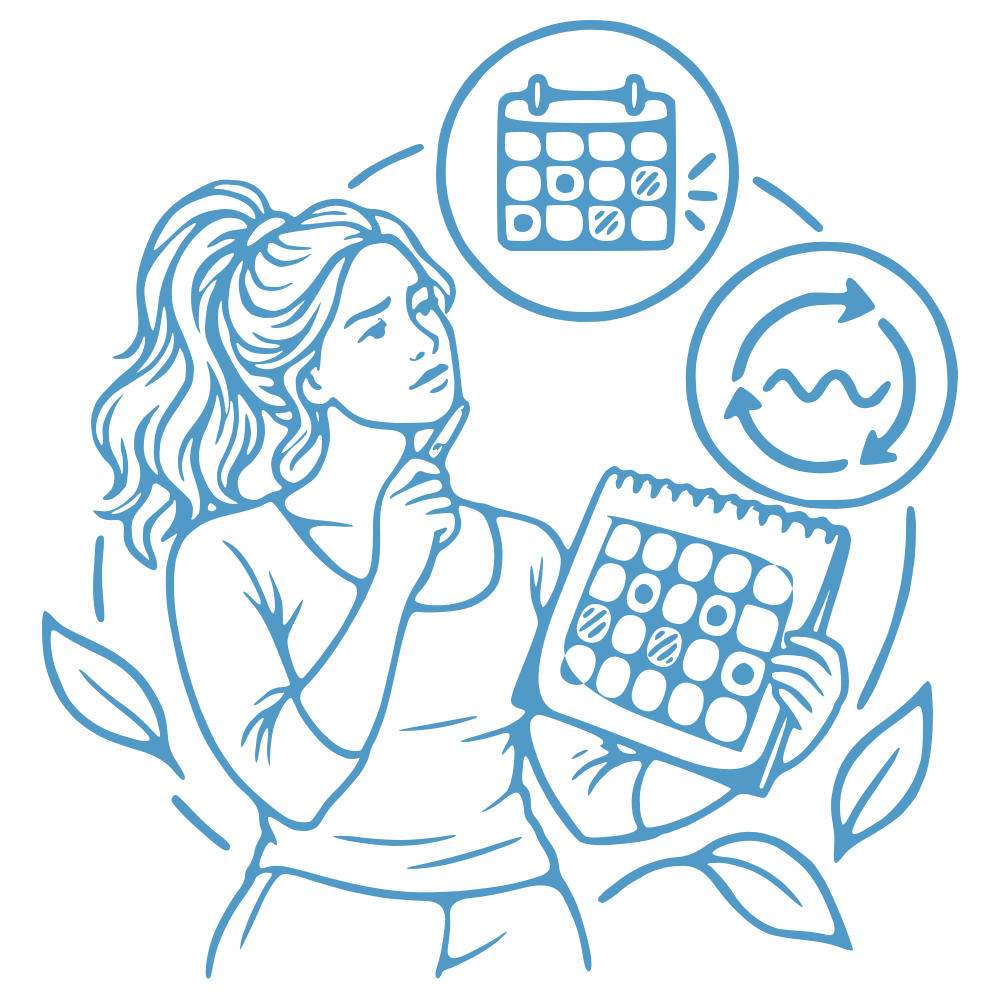
Woman holding a calendar and looking puzzled, with uneven calendar and cycle arrow icons

Irregular Cycles

Periods that change in timing, length, or flow, often one of the first signs of the transition.
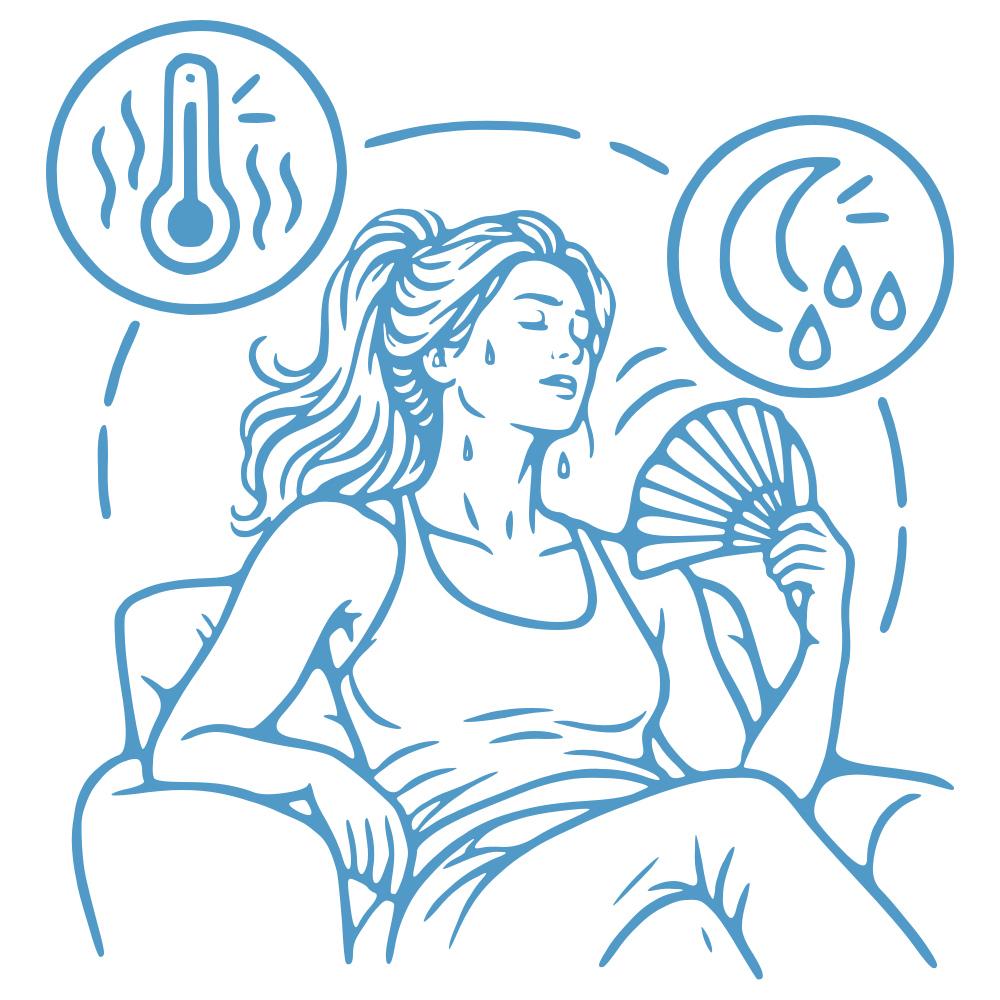
Flushed woman fanning herself in an armchair, with heat thermometer and night sweat icons

Hot Flashes & Night Sweats

Sudden waves of warmth that can disrupt sleep, work, and daily comfort.
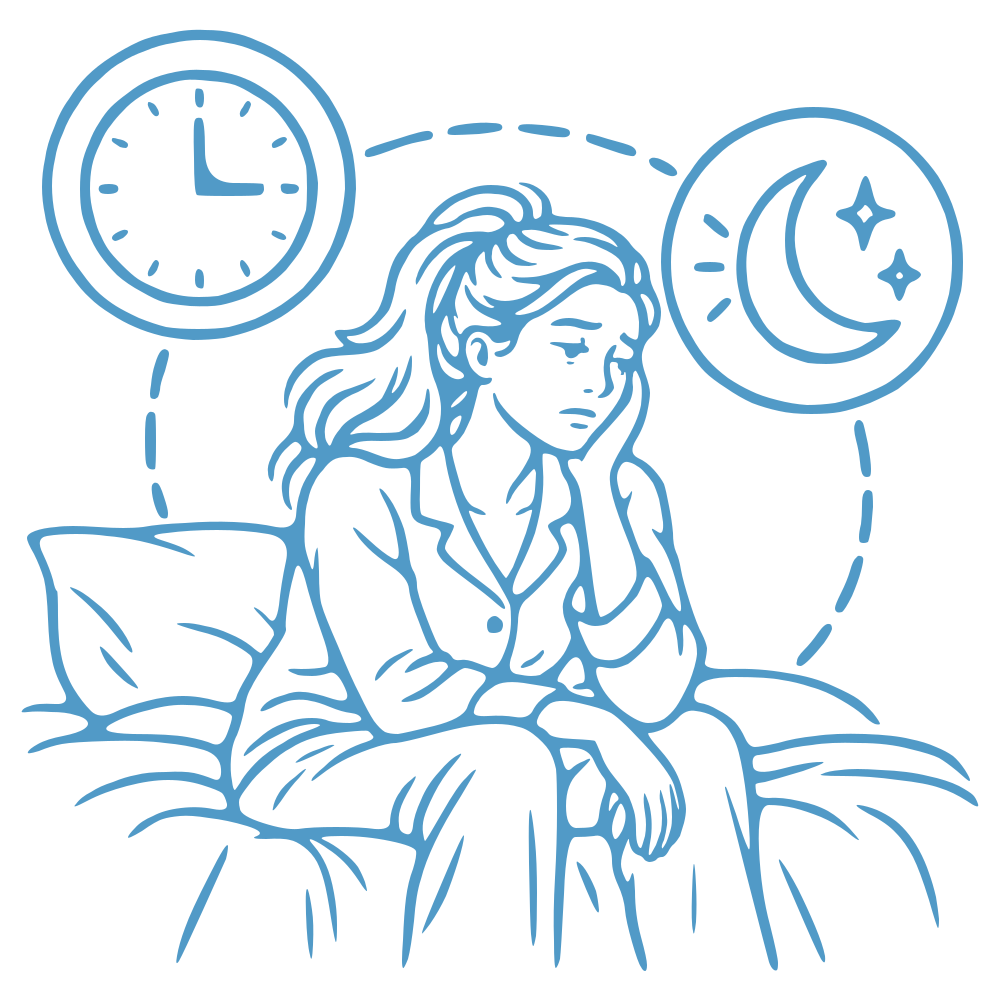
Woman sitting awake on the edge of her bed, with clock and crescent moon icons

Sleep Changes

Trouble falling or staying asleep, sometimes linked to night sweats or shifting hormones.
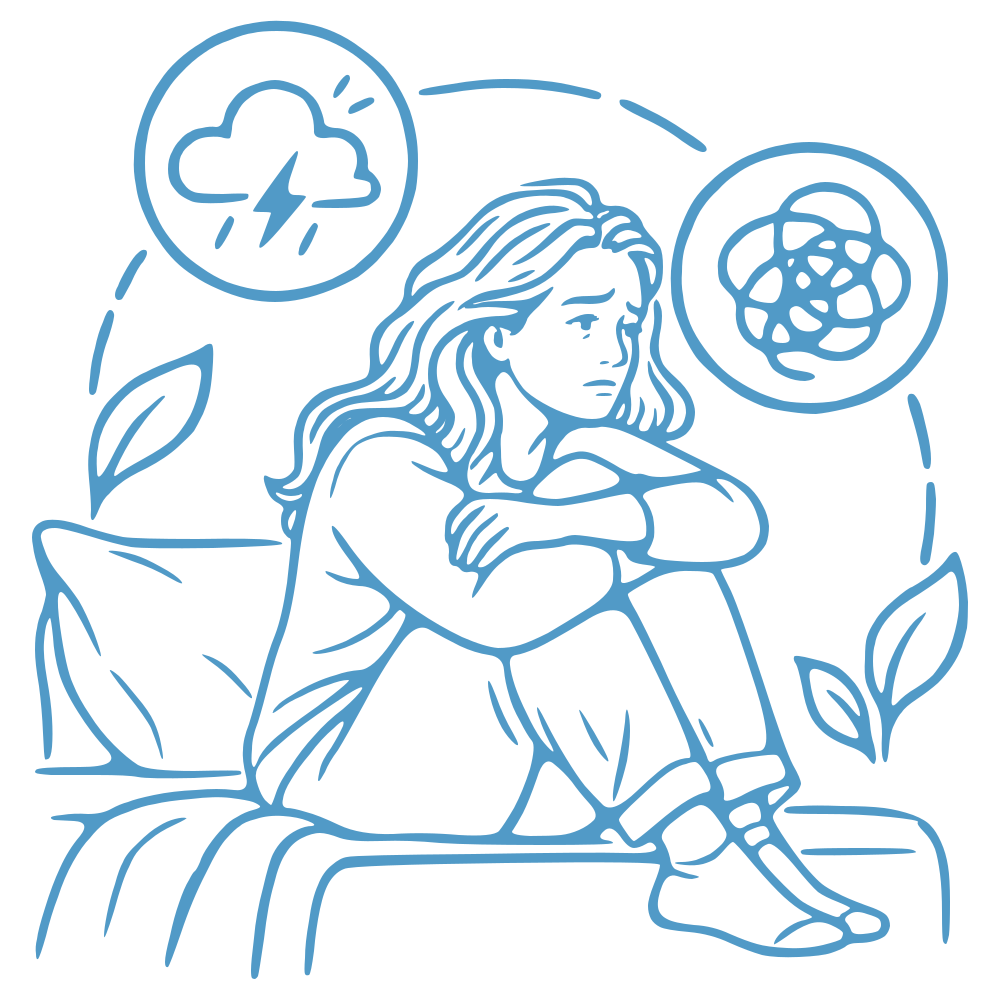
Worried woman seated on a bench hugging her knees, with storm cloud and tangled line icons

Mood & Anxiety

New irritability, low mood, or anxiety that feels out of character.
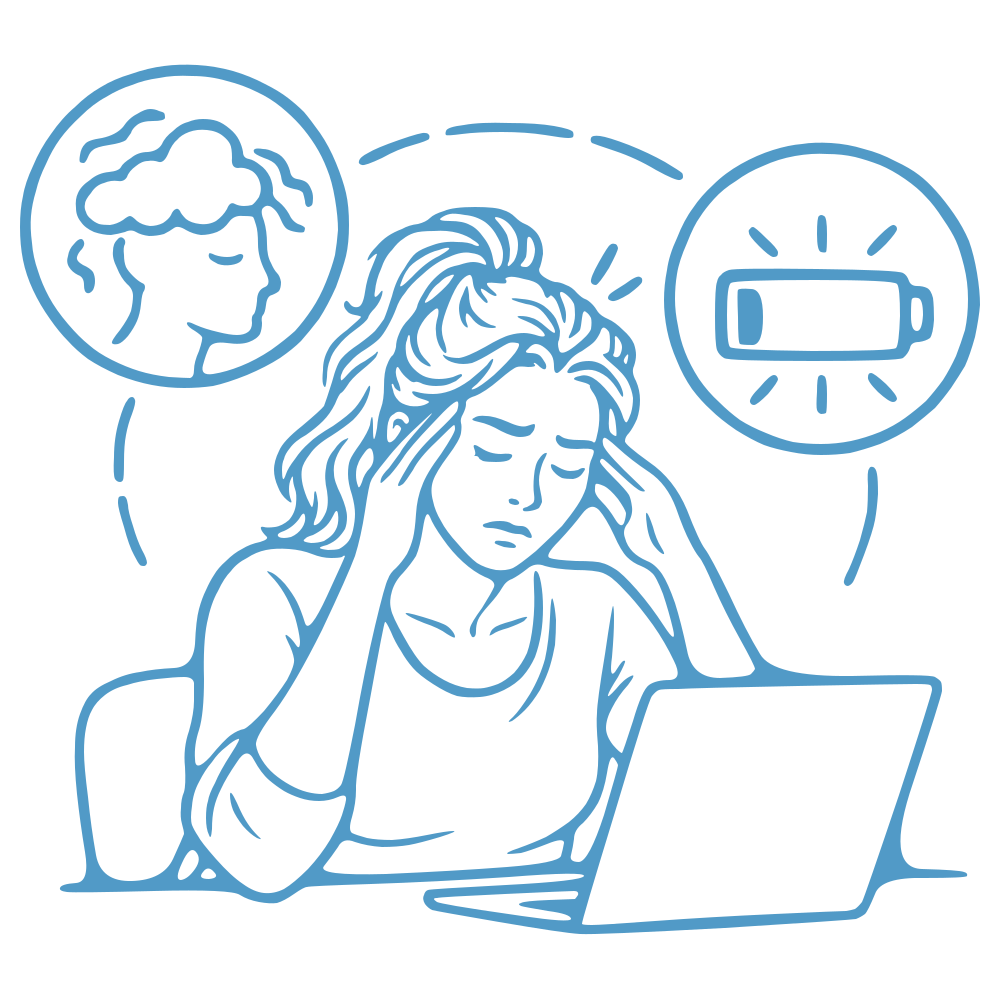
Woman rubbing her temples at a laptop, with foggy head and low battery icons

Brain Fog & Fatigue

Trouble focusing, forgetfulness, or feeling worn down despite rest.

Woman holding a mug by a window, with a heart and wave line icon

Changes in Libido

Shifts in desire or comfort, including dryness, that can affect intimacy.

A Personalized Approach to Perimenopause

Part Art, Part Science

Allana describes perimenopause care as part art, part science: listening to what your body is telling us, and looking at the numbers for safety.

She also checks whether symptoms could come from something else, like low vitamin B12, thyroid changes, or iron deficiency, instead of assuming it’s all hormones. Getting that right first avoids treating the wrong problem.

Then she explains your options, their risks and benefits, and what each would mean for you. You decide what fits. Some women want to start with lifestyle changes; others want to discuss hormone therapy right away. Both are valid starting points.

Whatever you choose, you’ll know what to expect, what to watch for, and when we’ll check in again. If something isn’t working, we change course together rather than asking you to push through.

What to Expect at Your First Visit

Getting to Know Your Whole Story

Your first visit covers your medical, family, and surgical history, and your menstrual cycle history over your lifetime, including time on or off hormones or birth control. We’ll ask what your cycles have been like recently, too.

We’ll also ask when the women in your family went through perimenopause and menopause, since family patterns can offer helpful clues.

We order a comprehensive morning lab panel that looks at hormones as well as thyroid, iron, vitamins, and metabolic health. It can help to keep a simple log of your cycles, sleep, and symptoms for a few weeks before your visit, since patterns over time often tell us more than any single day.

Perimenopause Treatment Options

Least Invasive to Most Invasive

We don’t go from zero to sixty. Perimenopause treatment options are chosen based on your symptoms and labs, starting with the least invasive.

For some women, addressing sleep, stress, nutrition, or a deficiency makes a meaningful difference. For others, symptoms are disruptive enough that hormone therapy is worth discussing. Many end up somewhere in between.

Because hormones keep shifting during this stage, a plan that works now may need adjustment later. Regular follow-ups keep your care matched to where you are in the transition.

Correcting issues like nutritional deficiencies or thyroid changes that can mimic or worsen perimenopause symptoms. Sometimes fixing one of these makes a bigger difference than expected.

Sleep, stress, nutrition, and activity changes that can ease symptoms and support long-term health. Our article on sleep and hormones covers one of the most common complaints.

When appropriate, hormone therapy may be considered, with risks and benefits discussed openly based on your health history. Our guide to what women should know before hormone therapy is a good starting point. Learn about HRT for women.

Because hormones shift during this stage, plans are reviewed and adjusted over time, rather than set once and left alone.

Perimenopause vs. Menopause

Where You Are in the Transition Matters

Menopause is reached after 12 months without a period. Perimenopause is the stretch before it, when changes are often most unpredictable. After a hysterectomy, where you are in the transition is judged by symptoms rather than periods.

The two stages can feel similar, but the approach often differs. In perimenopause, hormones fluctuate; after menopause, they settle at lower levels. That affects how symptoms are evaluated and how treatment is adjusted. Our guide to perimenopause vs. menopause explains how to tell where you are.

If you’re past that point, see our Menopause Treatment page.

Many of the same symptoms continue into early menopause, and some, like vaginal dryness or changes in bone and heart health, become more important to watch afterward. Having one provider follow you through both stages keeps your care consistent as your needs change.

Your Family History Matters

Clues From the Women Before You

When your mother, sisters, or other female relatives went through perimenopause and menopause can offer helpful clues about your own timing and experience.

Family history isn’t destiny, but it can help set expectations and guide what we watch for. If your mother had an early or difficult transition, for example, that’s useful to know.

That’s why family history is part of every evaluation, alongside your own cycle history and symptoms.

We’ll also ask about your own history: how puberty went, any past pregnancies, and whether you’ve had surgery such as a hysterectomy or removal of the ovaries. Each of these can affect timing and symptoms, and together they help us understand what is typical for you and what may need a closer look.

If symptoms point to something beyond Allana's scope, such as a gynecological issue like very heavy or prolonged bleeding, or bleeding between periods or after sex, she refers you to the right specialist and helps coordinate next steps.

This content is for informational purposes only and is not medical advice. No treatment can guarantee results. Bleeding after 12 months without a period should always be evaluated. See our Medical Disclaimer.

Your Perimenopause Care Process

From Your Full History Through Ongoing Adjustments

Blue line-art circle of conversation and health icons representing an initial consultation with a provider

Consultation

Your full history, cycle history, family history, and current symptoms.

Blue line-art medical clipboard connected to health icons representing a comprehensive evaluation

Labs

A comprehensive morning panel, read alongside your symptoms, not on its own.

Blue line-art medical clipboard surrounded by wellness icons representing a personalized care plan

Your Personalized Plan

Least-invasive options first, with risks and benefits explained clearly.

Blue line-art circle with a calendar and health tracking icons representing follow-up care

Follow-Up & Adjustments

Plans adjusted as your hormones continue to change through the transition.

Meet Your Perimenopause Provider

Women's Hormone Care Led by an Experienced Family Nurse Practitioner

Allana Bush, FNP-C, provider at Lake Forest Regenesis in Lake Forest, Illinois.

Perimenopause care at Lake Forest Regenesis is led by Allana Bush, FNP-C, RN, PHN, MSN, a family nurse practitioner with more than 20 years of healthcare experience.

Her clinical focus includes hormone optimization, sexual wellness, functional and regenerative medicine, medical weight management, metabolic health, and personalized wellness care. This broader perspective allows perimenopause to be considered within the context of your overall health, including sleep, weight, mood, and sexual wellness.

Allana combines your symptoms, history, and labs, and adjusts care as your body changes through the transition.

Benefits of Whole-Person Perimenopause Care

Designed to follow your changing hormones, starting with the least invasive options.

Woman holding an open health folder, with family tree, calendar, clipboard and heart icons

Looks at Your Whole Story

History, cycles, family patterns, and symptoms, not just a single lab value.

Woman holding a magnifying glass to a checklist, with thyroid and lab tube icons

Rules Out Other Causes

Thyroid, iron, and vitamin issues are checked, because not everything is hormones.

Relaxed woman stepping up three easy steps, with leaf, capsule and hormone molecule icons

Least Invasive First

No jumping straight to the strongest option before simpler steps are considered.

Woman comparing a lab sheet with her notebook, with linked lab tube and graph icons

Labs Read in Context

One snapshot is never the whole picture during perimenopause.

Woman doing a gentle stretch in fitted athletic wear, with calendar, wave graph and refresh icons

Adjusted Over Time

Care that follows your changing hormones, visit by visit.

Woman in an armchair choosing one of three option cards, with balance scale and lightbulb icons

You Make the Decisions

Clear options, risks, and benefits so you can choose what fits.

Related Reading

Perimenopause Articles From Our Patient Education Library

Perimenopause Frequently Asked Questions

Answers to Common Questions About Symptoms, Testing & Treatment

Changes in your cycle, sleep, mood, or temperature in your 40s, sometimes earlier, can be signs. An evaluation helps sort out perimenopause from other causes.

Not on its own. Hormones vary a lot during this stage, so one test is a snapshot. We look at your labs together with your symptoms and history.

Not necessarily. We start with the least invasive options, and hormone therapy is one choice you can consider if it fits.

Perimenopause is the transition; menopause is reached after 12 months without a period. See our Menopause Treatment page.

It can, through changes in desire, dryness, or comfort. Our guide to menopause and sexual health covers what helps.

Yes. Ovulation becomes less regular but can still happen, so contraception is still needed if you want to avoid pregnancy.

Start Your Regenesis Today

Take the Next Step Toward Personalized Perimenopause Care

Begin With a Consultation

We go over your full history, cycle history, family history, and symptoms.

Get Your Labs

A comprehensive morning panel, read alongside your symptoms rather than on its own.

Build Your Plan

Least-invasive options first, adjusted as you go. Results vary, and no treatment can be guaranteed. See our Medical Disclaimer.

Lake Forest Regenesis logo

A Personal Message From Your Provider

The Transition Deserves Attention

“Perimenopause is part art, part science. Your hormones are changing from week to week, so I can’t rely on one lab or one visit to tell the whole story.

I listen to what your body is telling us and look at the numbers for safety. I also make sure we’re not missing something else, like a thyroid or vitamin issue, before we assume it’s all hormones.

Then I help you choose the path that feels right for you, starting with the gentlest options and adjusting as your body changes.”

Signature of Allana Bush, FNP-C, lead provider at Lake Forest Regenesis

Allana Bush, FNP-C, RN, PHN, MSN

Medical Weight Management & Hormone Optimization
Lake Forest, IL