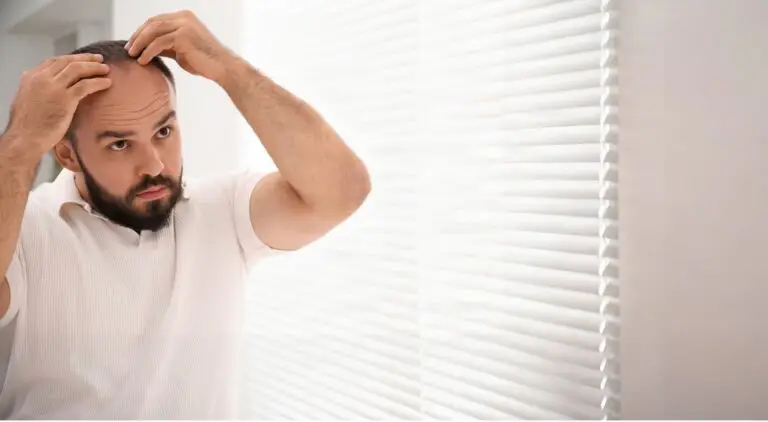

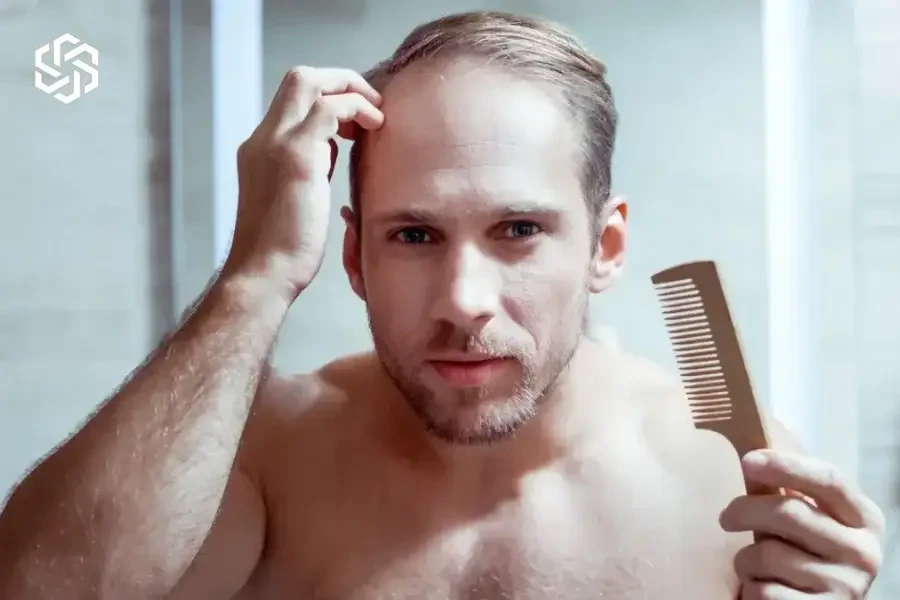
Man checking his receding hairline near a window, considering hair thinning treatment

Hair Thinning Treatment
in Lake Forest, IL

Whole-Person Care That Looks for Why Your Hair Is Changing, for Women and Men

Personalized Hair Thinning Care at Lake Forest Regenesis

Provider-Guided Care That Starts With the Cause

Lake Forest Regenesis offers hair thinning treatment and evaluation for adults in Lake Forest, Chicago’s North Shore, and Lake County. Noticing more hair in the shower drain, a wider part, or a thinner ponytail can be unsettling, and it’s often hard to know where to start.

Thinning hair often has an underlying cause, like hormone changes, thyroid issues, nutritional deficiencies, stress, or medications. Products and supplements bought without knowing the cause can waste time and money. We look for the cause first, then talk through options that fit it.

We see both women and men, with care tailored to your pattern of hair loss and your goals. It’s part of our Hormone Optimization care, and it draws on our comprehensive lab testing.

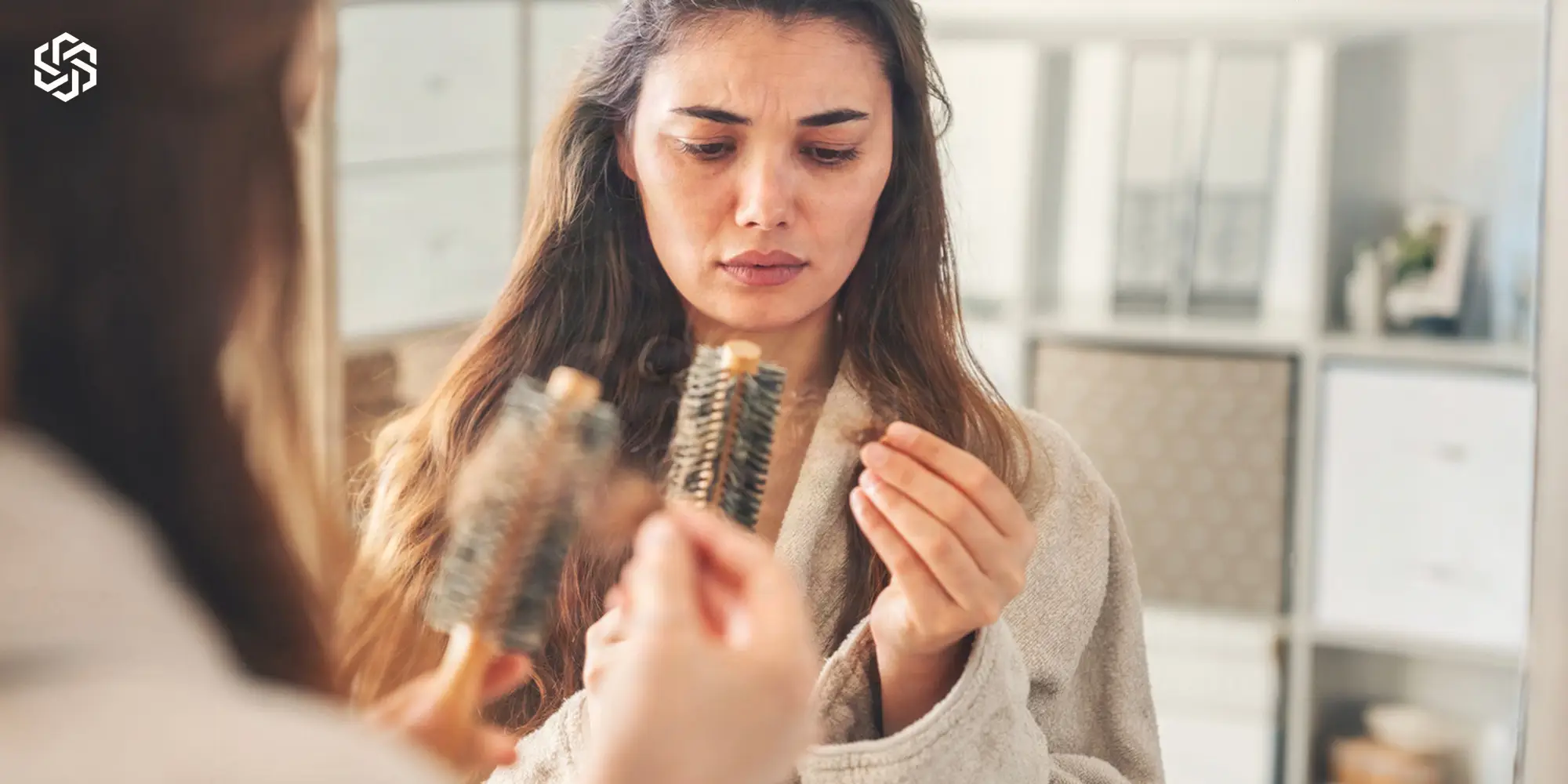
Woman looking with concern at hair caught in her brush

Why Hair Thins

Your Hair Can Reflect What's Happening Inside

Hair growth depends on hormones, nutrition, thyroid function, stress levels, and overall health. Hair follicles are very active, so when something shifts in the body, hair is often one of the first places it shows.

Some shedding is normal. According to MedlinePlus, people lose up to about 100 scalp hairs a day, and most grow back. Thinning becomes a concern when shedding increases, regrowth slows, or the overall density of your hair changes.

Timing can be a clue. Significant stress, illness, surgery, childbirth, or rapid weight loss can trigger increased shedding a few months later. Hormonal and hereditary thinning, on the other hand, tends to develop gradually. Our article on hormonal and medical causes of hair thinning explains the most common reasons.

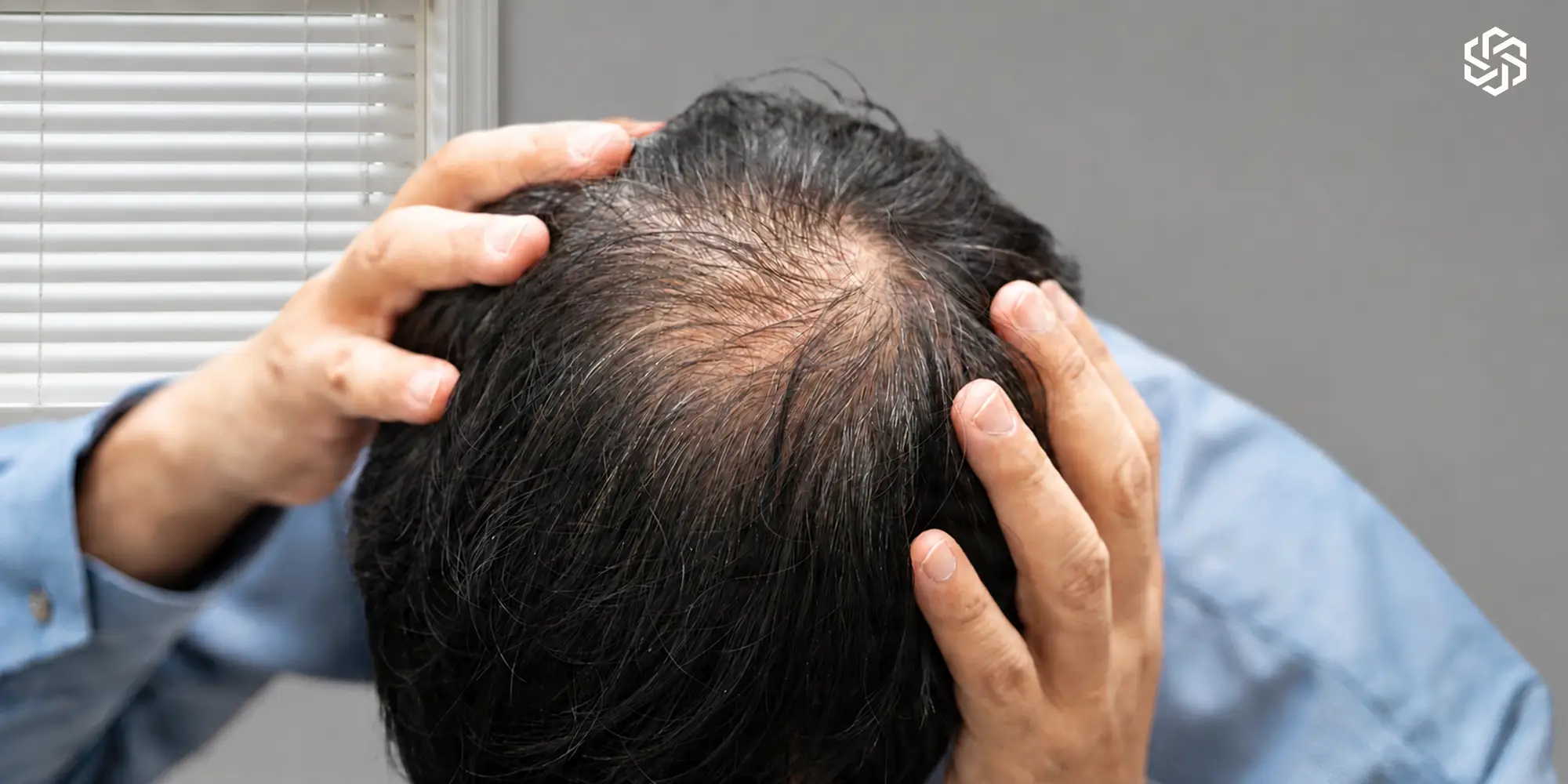
Man parting his hair to show thinning at the crown

The Pattern Tells Us Where to Look

Thinning, Texture, Patches, or Pattern Loss

How hair is changing offers important clues. Is it general thinning, a change in texture, loss in patches or clumps, or a male-pattern shape such as a receding hairline or thinning crown?

Diffuse thinning across the scalp often points toward hormonal, thyroid, nutritional, or stress-related causes. Patchy loss can suggest an autoimmune or scalp condition that may need a dermatologist. Pattern thinning in men and women is often hereditary and hormone-related. Texture changes, like hair becoming finer or more brittle, can point toward thyroid or nutritional factors.

Each pattern points toward different possible causes and treatments, which is why we look closely before recommending anything. Photos taken over a few months can also help show whether things are changing.

Common Concerns We Evaluate

Thinning, Texture, Patches, Pattern Loss, Hormones & Stress

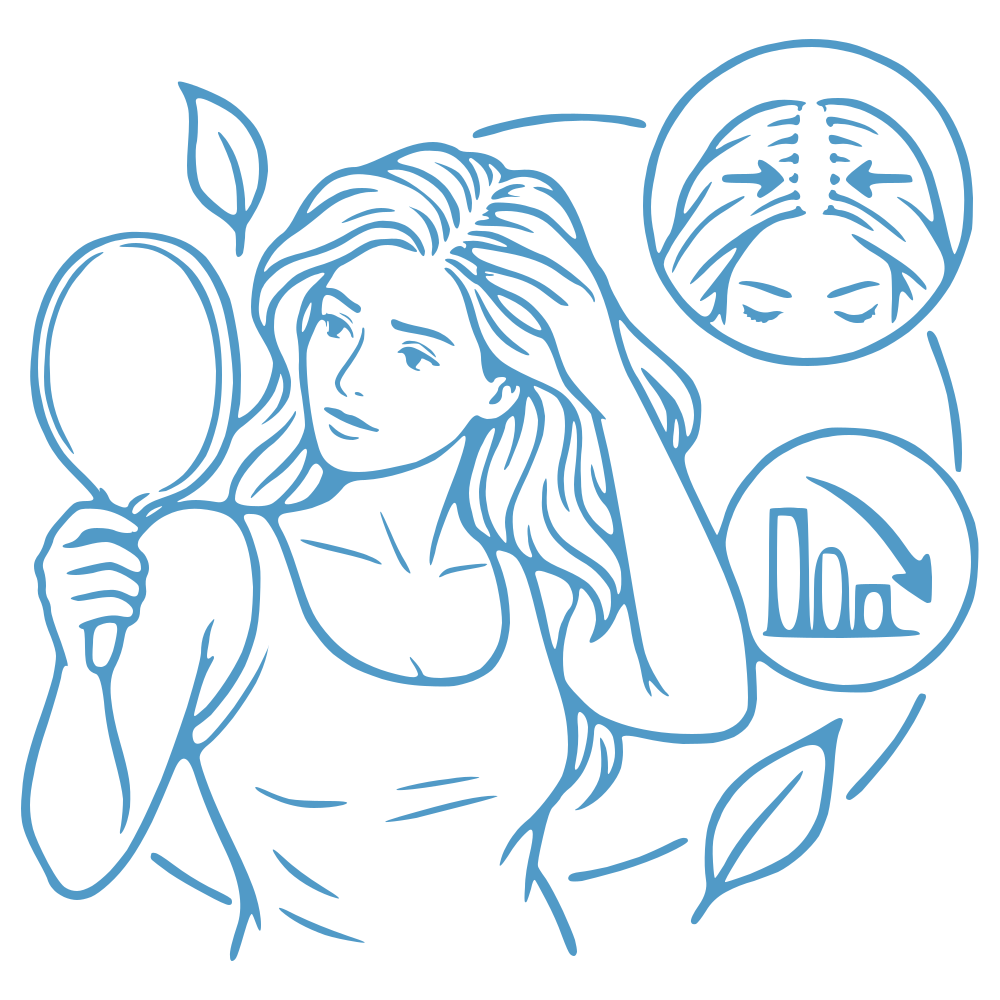
Woman checking her hair part in a hand mirror, with widening part and downward chart icons

General Thinning

Less volume, a wider part, or a thinner ponytail that develops over time.
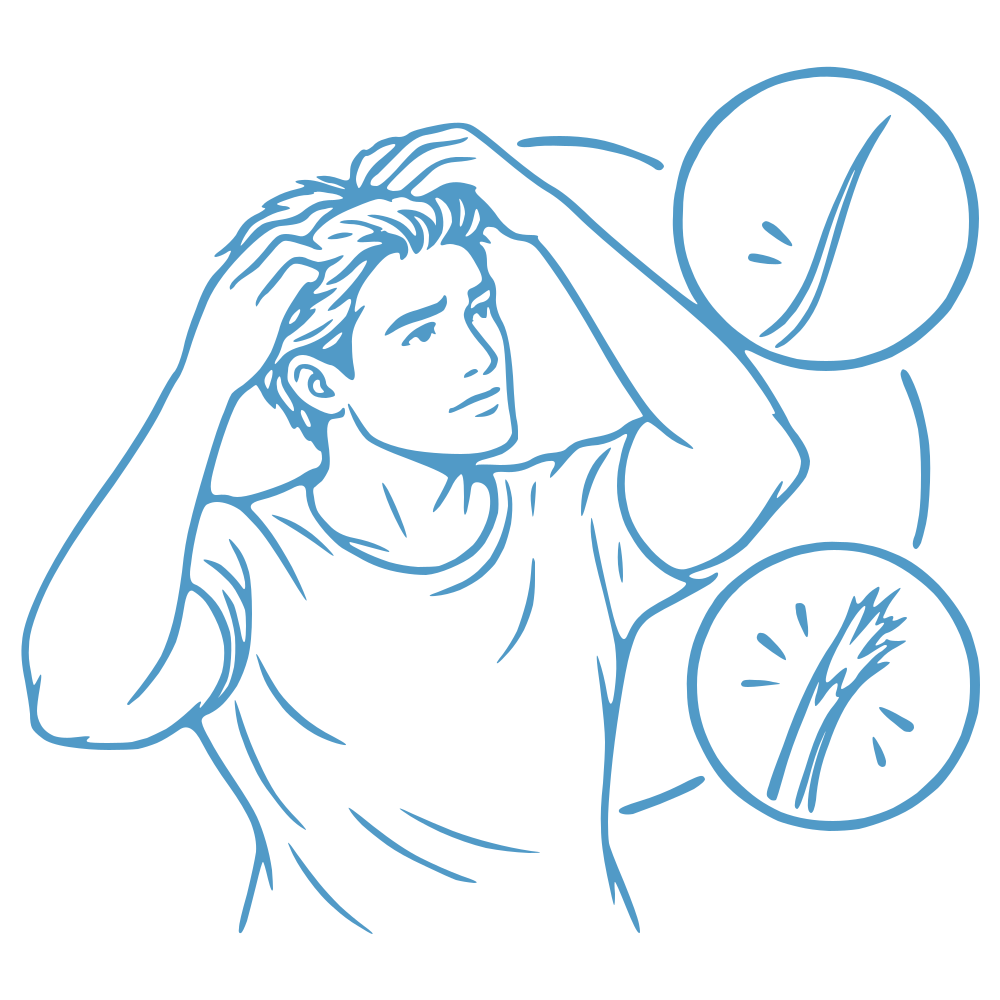
Man running his fingers through his hair, with fine hair strand and broken strand icons

Texture Changes

Hair that feels finer, drier, coarser, or more brittle than it used to.
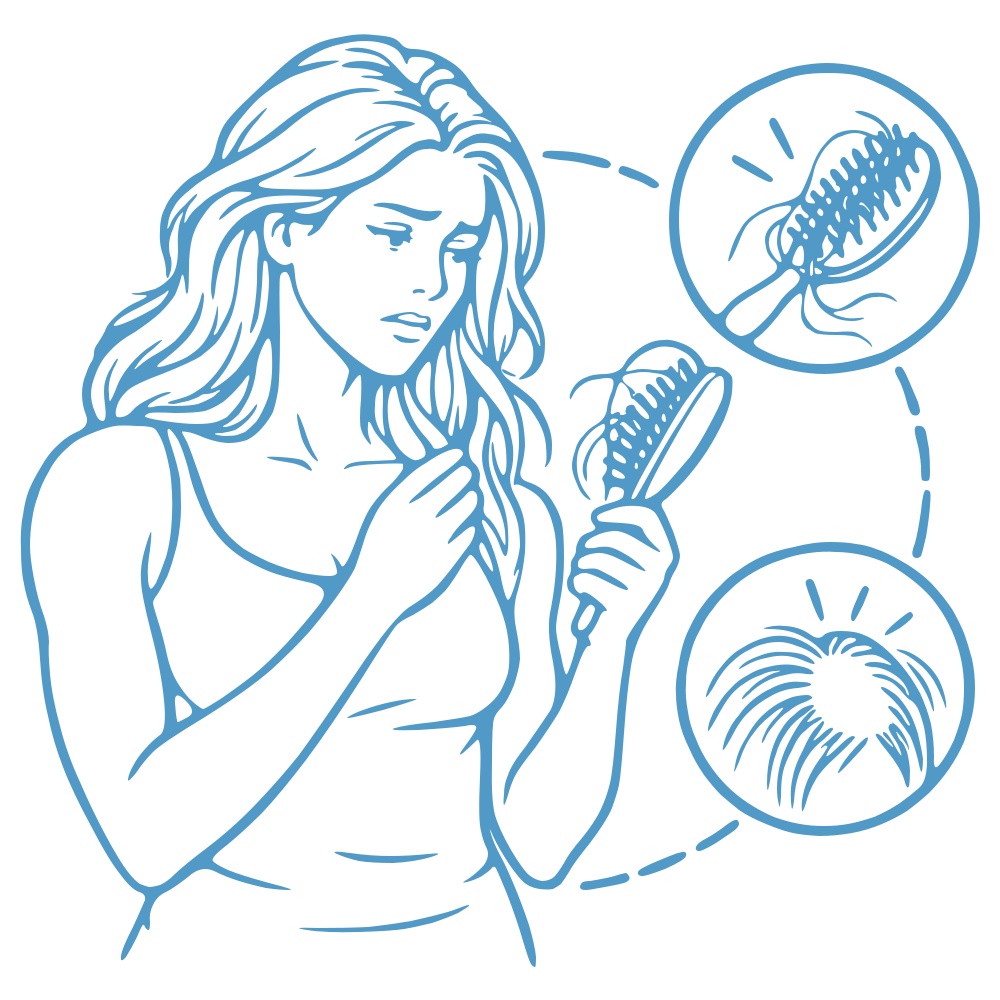
Concerned woman holding a hairbrush with loose strands, with brush and thinning patch icons

Patches or Clumps

Hair coming out in specific areas or in larger amounts than usual.
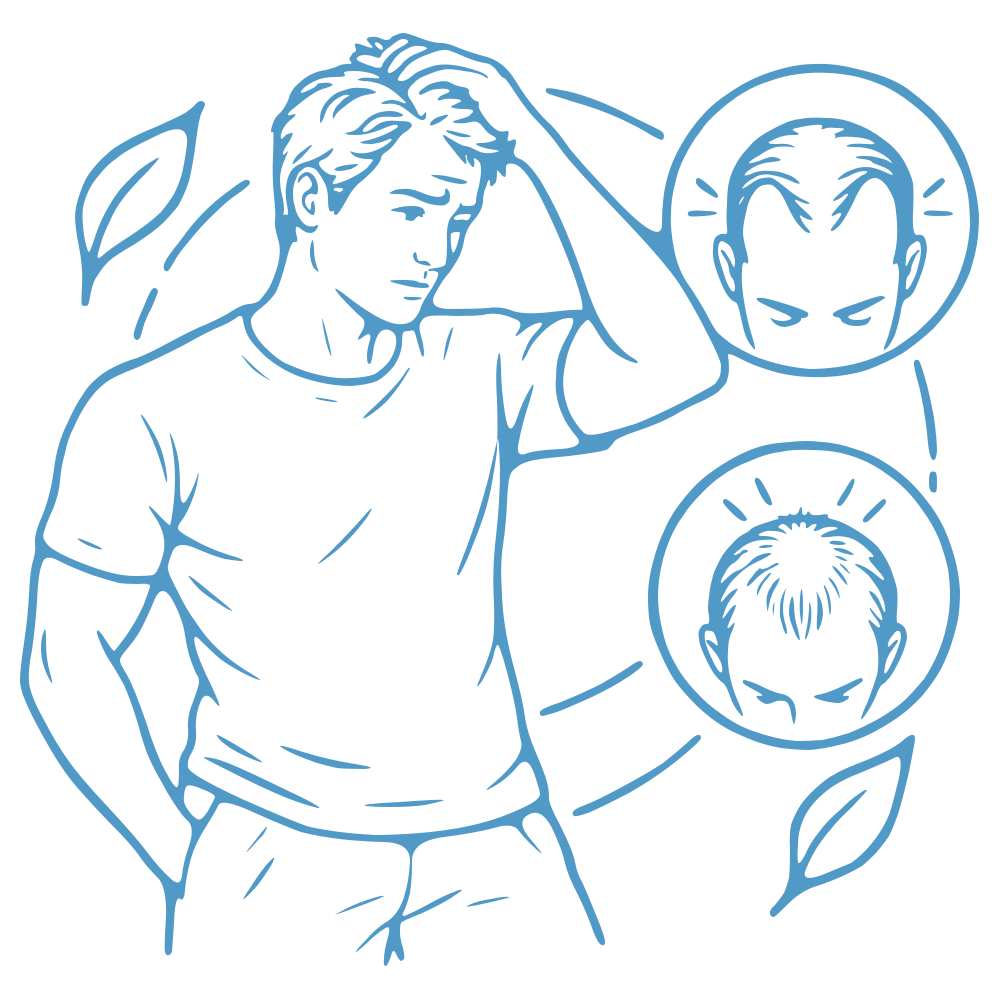
Man touching the crown of his head, with receding hairline and crown thinning icons

Pattern Hair Loss

A receding hairline or thinning crown, in men or women.

Woman reviewing a lab sheet at a desk, with thyroid, hormone molecule and balance scale icons

Hormone Changes

Shifts in thyroid, testosterone, or estrogen that can affect hair growth.
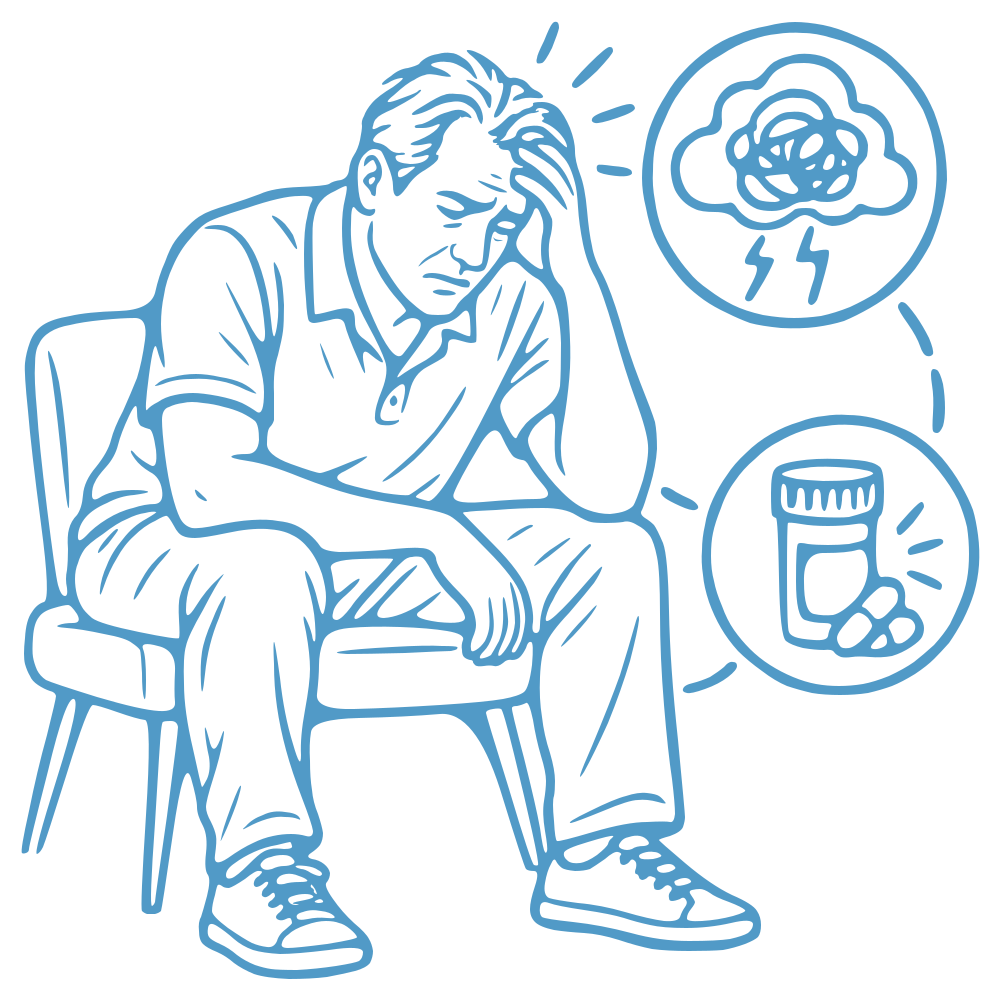
Stressed man sitting forward in a chair with his hand on his head, with stress cloud and pill bottle icons

Stress & Medications

Both can trigger or worsen shedding, sometimes months after the cause.
A Personalized Approach to Hair Thinning

Care Built Around Your Cause and Your Goals

Allana looks at your labs, history, what you’ve already tried, and the pattern of your hair loss. Many people have already tried shampoos, supplements, or over-the-counter products by the time they come in, and knowing what did or didn’t help is useful.

She explains what your body is telling you and what your options are, including the risks, benefits, and realistic timelines of each. You decide what fits.

Hair grows slowly, so patience is part of any plan. We set expectations clearly and track progress over months, not days.

If your hair loss turns out to be temporary shedding after a stressful event, the best plan may simply be correcting any deficiencies and giving your hair time to recover. If it’s hereditary or hormonal, longer-term treatment may make more sense. Either way, you’ll understand why.

What to Expect at Your First Visit

Labs, History, and a Close Look at the Pattern

Your first visit covers your symptoms, medical history, medications, stress, diet, and past treatments, along with when you first noticed changes and whether hair loss runs in your family.

We order a comprehensive morning lab panel to check for nutritional deficiencies, thyroid issues, and hormone imbalances. Low iron stores are a common, often overlooked factor; our guide to ferritin and iron explains why iron stores are worth checking even when other results look normal. We also look at vitamin D and B12.

We’ll also take a close look at the pattern of your hair loss to help guide where to look next.

It helps to bring a list of any products, supplements, or medications you’ve used for your hair, and roughly how long you used them, so we can build on what you’ve already tried.

Hair Thinning Treatment Options

Guided by What We Find

Options depend on the cause, and many people combine approaches. Correcting an underlying issue, like a deficiency or thyroid problem, can be the most important step, with other treatments added to support regrowth.

Every option has potential benefits and risks. Some medications aren’t appropriate during pregnancy or with certain health conditions, so Allana reviews your history carefully before recommending anything.

Because hair grows in cycles, it often takes several months to see whether a treatment is helping, and stopping some treatments can reverse their benefits. We talk through all of this up front.

Applied directly to the scalp, when appropriate. Topicals usually need consistent daily use for several months before results can be judged.

Prescription options, when they fit your cause and health. Some aren't appropriate during pregnancy or with certain conditions, so we review your history carefully first.

When labs show a hormonal factor, such as thyroid or sex hormone changes, addressing it may support hair along with other symptoms. Learn about hormone optimization.

Correcting deficiencies like low iron or vitamin D, and peptide therapy when appropriate, with clear expectations, since evidence for peptides in hair loss is still limited. Supplements are recommended based on your labs, since more isn't always better. Biotin, common in hair supplements, can affect some lab results, so let us know before your draw.

Hormones, Thyroid & Hair

Why Labs Come First

Thyroid changes, shifts in testosterone and estrogen, and perimenopause or menopause can all affect hair. In women, falling estrogen during the menopause transition can make hair finer. In men, sensitivity to certain hormones drives pattern thinning.

An underactive thyroid can cause diffuse thinning and coarser, drier hair, and it’s easy to miss without testing. Our thyroid panel guide explains what we look at.

That’s why labs are part of every evaluation. Learn about our thyroid care and perimenopause treatment.

Hair changes after childbirth are also common and usually temporary, as hormone levels settle. If shedding continues well beyond the postpartum months, it’s worth checking iron, thyroid, and other factors.

Thinning that comes with irregular periods, new acne, or new facial hair is worth evaluating for hormonal causes.

Nutrition, Stress & Hair

The Everyday Factors That Add Up

Low iron, vitamin deficiencies, ongoing stress, restrictive dieting, and some medications can all contribute to thinning. Hair is not essential for survival, so when the body is short on resources, hair growth is often one of the first things to slow.

Rapid weight loss, including during GLP-1 treatment, can also trigger temporary shedding. Getting enough protein and key nutrients during weight loss helps protect both muscle and hair.

Addressing these everyday factors can be an important part of your plan, and sometimes it’s the main fix.

Hair styling habits can matter too. Tight hairstyles, frequent heat styling, and harsh chemical treatments can cause breakage or traction-related thinning, so we may talk through simple changes that reduce stress on the hair while other treatments do their work.

For more invasive treatments like PRP injections, or more complex cases such as patchy, scarring, or rapidly progressing hair loss, Allana refers to a dermatologist and helps coordinate next steps.

This content is for informational purposes only and is not medical advice. No treatment can guarantee results. See our Medical Disclaimer.

Your Hair Care Process

From Consultation Through Follow-Up

Blue line-art circle of conversation and health icons representing an initial consultation with a provider

Consultation

History, symptoms, medications, family history, and past treatments.
Blue line-art medical clipboard connected to health icons representing a comprehensive evaluation

Labs & Pattern Review

Comprehensive labs and a close look at your hair loss pattern.

Blue line-art medical clipboard surrounded by wellness icons representing a personalized care plan

Your Personalized Plan

Options, risks, benefits, and timelines, explained clearly.

Blue line-art circle with a calendar and health tracking icons representing follow-up care

Follow-Up & Adjustments

Hair changes slowly, so we track progress over months.

Meet Your Hair Thinning Provider

Hair Thinning Care Led by an Experienced Family Nurse Practitioner

Allana Bush, FNP-C, provider at Lake Forest Regenesis in Lake Forest, Illinois.

Hair thinning care at Lake Forest Regenesis is led by Allana Bush, FNP-C, RN, PHN, MSN, a family nurse practitioner with more than 20 years of healthcare experience.

Her clinical focus includes hormone optimization, sexual wellness, functional and regenerative medicine, medical weight management, metabolic health, and personalized wellness care. This broader perspective allows hair changes to be considered within the context of your overall health, not just as a cosmetic concern.

Allana treats hair thinning in-house and refers to a dermatologist for invasive treatments or more complex cases.

Because hair changes often overlap with other concerns, like fatigue, weight changes, or menopause symptoms, Allana can address those together in one plan rather than sending you to separate providers for each.

Benefits of Whole-Person Hair Thinning Care

Designed to find the cause and give you options you choose.

Woman holding a magnifying glass, with hair strand and lab tube icons

Looks for the Cause

Not just treating what you see, but finding why it is happening.

Man holding a checklist clipboard, with lab tube, thyroid, apple and hormone molecule icons

Comprehensive Labs

Hormones, thyroid, iron, and vitamins checked together.

A woman and a man standing side by side, with female and male symbol icons

For Women and Men

Care tailored to your pattern and your goals.
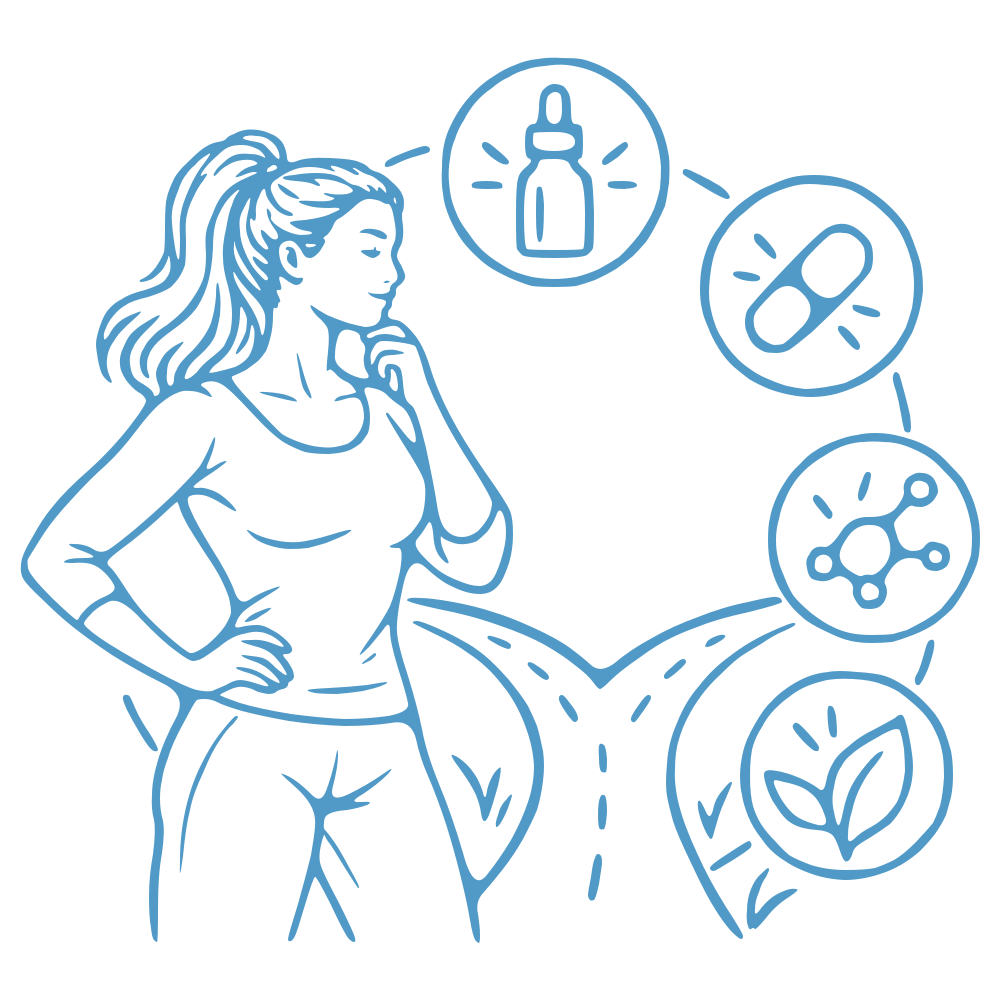
Woman at a fork in a path considering options, with dropper bottle, capsule, hormone molecule and leaf icons

Multiple Options

Topicals, oral medications, hormones, supplements, and peptides.

Smiling man holding a referral card and giving a thumbs-up, with clinic building and handshake icons

Dermatology Referrals When Needed

For invasive treatments like PRP or more complex cases.

Woman in an armchair choosing one of three option cards, with balance scale and lightbulb icons

You Make the Decisions

Clear options so you can choose what fits.
Related Reading

Hair & Hormone Articles From Our Patient Education Library

Hair Thinning Frequently Asked Questions

Answers to Common Questions About Causes, PRP & Results

Common causes include hormone changes, nutritional deficiencies, thyroid issues, stress, and some medications. Labs help narrow it down.

Not in our office. For PRP or other invasive treatments, we refer to a dermatologist.

Hair grows slowly, so changes usually take several months. Results vary, and no treatment can be guaranteed.

Yes, we evaluate both. The approach depends on the cause and pattern of thinning.

Yes. Losing up to about 100 hairs a day is normal. It's worth checking when shedding increases or density changes.

Rapid weight loss can trigger temporary shedding. Getting enough protein helps; see our guide to preserving muscle while losing weight.

Start Your Regenesis Today

Take the Next Step Toward Personalized Hair Thinning Care

Begin With a Consultation

We review your history, symptoms, medications, and past treatments.

Labs & Pattern Review

Comprehensive labs and a close look at your hair loss pattern to find the likely cause.

Build Your Plan

Clear options, risks, benefits, and timelines. Results vary, and no treatment can be guaranteed. See our Medical Disclaimer.

Lake Forest Regenesis logo

A Personal Message From Your Provider

Your Hair Can Tell Us Something

“Hair changes are often a sign of something going on inside, whether that’s hormones, thyroid, iron, stress, or something else.

I want to find out what that is before we try to treat it. Then I explain your options honestly, including how long they take to work and what the tradeoffs are.

From there, I help you choose what fits you, and we track your progress together over the months ahead.”

Signature of Allana Bush, FNP-C, lead provider at Lake Forest Regenesis

Allana Bush, FNP-C, RN, PHN, MSN

Medical Weight Management & Hormone Optimization
Lake Forest, IL