

Quick Answer
Hair thinning is common in both women and men, and it often has a medical explanation. Common causes include genetic pattern hair loss, temporary shedding after illness, stress, childbirth or rapid weight loss, thyroid problems, low iron, hormone changes during menopause and some medications. Finding the cause matters, because several types of hair loss improve once the trigger is addressed.
Who this is for: adults who have noticed more shedding, a widening part or overall thinning and want to understand what may be behind it.
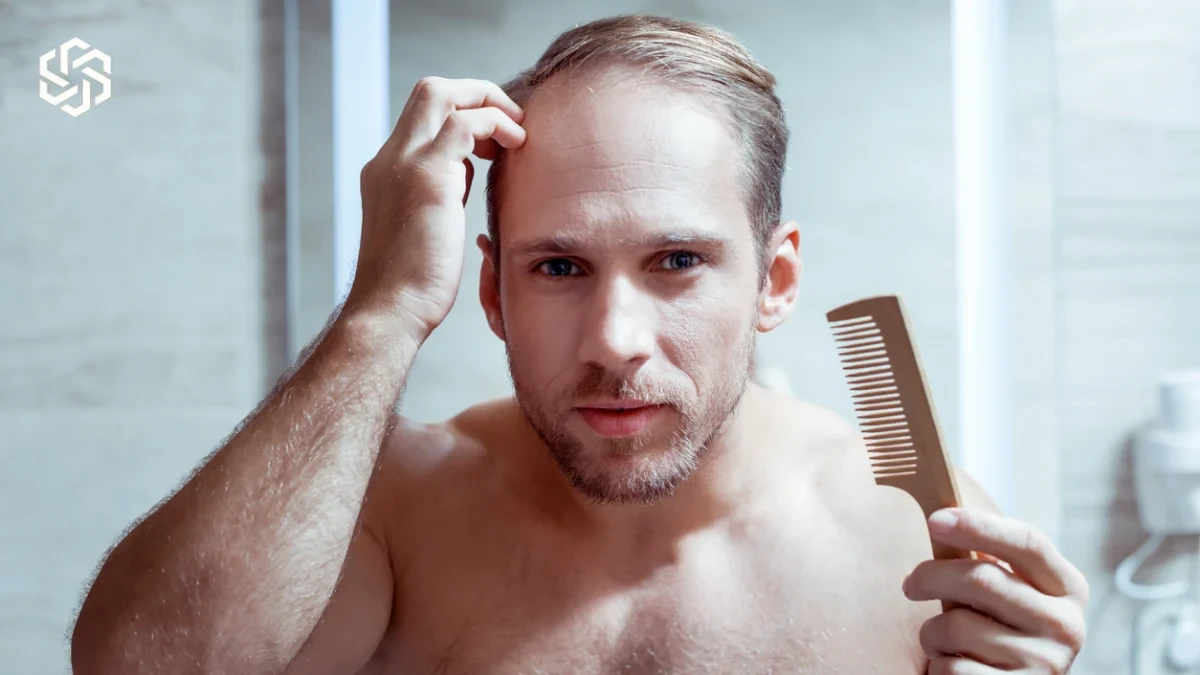
Common Patterns of Hair Thinning
Pattern hair loss
Male and female pattern hair loss are the most common types. In men, it often shows up as a receding hairline or thinning at the crown. In women, it usually appears as gradual thinning at the top of the scalp and a widening part. Genetics and hormones both play a role.
Shedding after a trigger
Telogen effluvium is a temporary increase in shedding that usually begins two to three months after a major stress on the body, such as illness, surgery, childbirth, a high fever, significant emotional stress or rapid weight loss. Hair often regrows once the trigger has passed.
Patchy hair loss
Round, smooth patches of hair loss can be caused by alopecia areata, an autoimmune condition, and should be evaluated.
Medical Causes Worth Checking
- Thyroid problems. Both an underactive and an overactive thyroid can cause hair thinning.[2]
- Low iron. Iron deficiency, even without anemia, is a common contributor, particularly in women with heavy periods.[1]
- Menopause. Falling estrogen can make hair finer and thinner for some women.
- Androgen excess. Conditions such as polycystic ovary syndrome can cause thinning on the scalp along with other symptoms.
- Rapid weight loss. Fast weight loss, including with weight loss medications, can trigger temporary shedding. Adequate protein and calories help.
- Medications. Some blood thinners, antidepressants, blood pressure medications and other drugs can contribute.
- Nutrition. Very low protein intake and some nutrient deficiencies can affect hair growth.

Hair thinning often has an identifiable cause.
How Hair Thinning Is Evaluated
An evaluation looks at the pattern of loss, how quickly it started, recent illnesses or life events, weight changes, menstrual history, medications and family history. Labs may include a thyroid panel, ferritin and iron studies, a blood count and, when symptoms suggest it, hormone testing. A dermatology referral may be helpful for patchy loss, scarring, scalp symptoms or loss that is not improving.
What Can Help
Treatment depends on the cause. Correcting a thyroid problem or iron deficiency may allow hair to recover. Shedding after a temporary trigger often improves on its own within months. Pattern hair loss can be treated with options such as topical or oral medications, which work best when started early and used consistently. Gentle hair care, avoiding tight hairstyles and eating enough protein also support healthy hair.
Hair growth is slow, so it often takes three to six months to see whether a change is helping.

How We Approach Hair Thinning at Lake Forest Regenesis
Allana looks at hair thinning as a possible sign of something happening elsewhere in the body. She reviews your history, recent changes, medications and diet, and orders labs such as thyroid testing, iron studies and hormone testing when they fit your symptoms. Treatable causes are addressed first, and she will refer you to a dermatologist when a specialist evaluation is the better next step.
When to See a Provider
See a provider if hair loss is sudden, patchy or rapidly worsening, or if it comes with fatigue, weight changes, irregular periods, acne or excess facial hair. Seek prompt care for scalp pain, redness, scaling or sores, which may need a dermatologist.

Noticing more shedding or a widening part? Allana can look for treatable causes behind it, with labs when they fit.
Frequently Asked Questions
Is it normal to lose some hair every day?
Yes. Most people shed some hair daily as part of the normal growth cycle. A noticeable increase in shedding or visible thinning is worth checking.
Can GLP-1 medications cause hair loss?
Rapid weight loss from any cause, including weight loss medications, can trigger temporary shedding. It usually improves, and adequate protein and nutrition can help.
Can low iron cause hair loss?
Yes. Low iron stores are a common, treatable contributor, especially in women. A ferritin test can help check iron stores.
Will my hair grow back?
It depends on the cause. Hair often regrows after temporary shedding or when thyroid or iron problems are treated. Pattern hair loss can be slowed and sometimes partly reversed with treatment.
References
- NIH Office of Dietary Supplements. Iron: fact sheet for health professionals. Read the fact sheet
- National Institute of Diabetes and Digestive and Kidney Diseases. Hypothyroidism (underactive thyroid). Read the article
This article is for general education and is not a substitute for individual medical advice. See our medical disclaimer.




