






Hormone
Optimization
in Lake Forest, IL
Personalized Hormone Care for Men & Women Designed Around Your Symptoms, Health & Long-Term Wellness
Hormone care built around your symptoms and health
★★★★★
“She takes the time to explain things in a way I can understand” — Janet H.
Rated 5.0 on Google · 42 reviewsPersonalized Hormone Optimization at Lake Forest Regenesis
Provider-Guided Care Built Around Your Symptoms, Lab Findings & Individual Health Goals
Lake Forest Regenesis provides personalized hormone optimization and hormone therapy for men and women in Lake Forest, IL, and across Lake County and Chicago’s North Shore, with care tailored to each patient’s symptoms, health history, stage of life and treatment goals.
Hormones influence many areas of health, including energy, sleep, mood, metabolism, body composition, sexual wellness, and overall well-being. Changes in these areas can have many possible causes, which is why hormone concerns should be evaluated within the context of your broader health rather than from laboratory values alone.
Care is led by Allana Bush, FNP-C, a family nurse practitioner with 22 years of healthcare experience, and recommendations may include lifestyle support, ongoing monitoring, or hormone therapy when appropriate.
Personalized Evaluation • Men’s & Women’s Health • Clinical Monitoring • Metabolic Health • Long-Term Support
What Is Hormone Optimization?
A Personalized Look at Hormone-Related Symptoms
Hormone optimization is a provider-guided approach to evaluating symptoms that may be related to hormonal changes while considering the broader factors that can influence how you feel, including age, medications, lifestyle, sleep, stress, metabolism, and existing health conditions.
Hormones help regulate many normal functions throughout the body, including energy, mood, sleep, metabolism, body composition, sexual wellness, and reproductive health. Changes in these areas do not automatically mean a hormone problem is present, which is why evaluation should consider both symptoms and appropriate clinical findings.
How Hormone Optimization Works
Symptoms, History & Labs Shape Your Plan
Care begins with a detailed review of your symptoms, history, medications, lifestyle, stage of life and goals to better understand what may be contributing to changes in how you feel. Lab testing may be used when clinically appropriate to evaluate relevant hormone levels and other health markers, but treatment decisions aren’t based on a single number; results are weighed with your symptoms, risk factors and overall picture.
Follow-up assesses your response, tolerance and symptom changes, with labs when needed, so care can be adjusted over time.
Hormone Optimization for Women & Men
Personalized Hormone Care Designed Around Different Stages of Life
Women may experience hormone-related changes during perimenopause, menopause, and other stages of adult life. Concerns can include hot flashes, disrupted sleep, mood changes, changes in body composition, vaginal symptoms, libido, and overall well-being.
At Lake Forest Regenesis, women’s hormone care considers symptoms, medical history, medications, stage of life, laboratory findings when appropriate, and individual treatment goals. When clinically appropriate, women’s hormone replacement therapy may be discussed as part of a personalized care plan.
For women in the transition years before menopause, our perimenopause treatment takes a least-invasive-first approach guided by symptoms, history and labs.
Men may seek hormone evaluation for changes involving energy, libido, strength, mood, body composition, sexual wellness, or overall vitality. These symptoms can have many causes, so evaluation should consider more than testosterone levels alone.
When appropriate, testing and clinical evaluation can help determine whether low testosterone or another health factor may be contributing. Testosterone replacement therapy may be considered for appropriate patients as part of an individualized, monitored treatment plan.
Because thyroid function and hormone changes often overlap, we also offer thyroid care for hypothyroidism and Hashimoto’s, and hair thinning treatment for women and men when hormones, thyroid or nutrition may be playing a role.
Common Reasons Patients Explore Hormone Optimization
Hormonal Changes Can Affect How You Feel at Different Stages of Life
Patients often explore hormone optimization for energy and fatigue concerns, sleep and mood changes, shifts in weight and body composition, or changes in libido and sexual wellness. Each of these can have hormonal and non-hormonal causes, so a personalized evaluation helps identify what may be contributing in your situation.
Women with hot flashes, poor sleep, mood changes or vaginal symptoms during perimenopause and menopause may benefit from an individualized evaluation through our menopause treatment or perimenopause treatment. Men noticing changes in energy, libido, strength, mood or body composition can learn whether clinically low testosterone may play a role through testosterone replacement therapy.
Not sure where your symptoms are coming from? Our free, 2-minute symptom checks show how your symptoms are affecting you and whether testing makes sense, with one designed for women and one for men.
What Your Hormone Optimization Program May Include
Personalized Care Built Around Your Symptoms, Clinical Findings & Treatment Goals
Comprehensive Evaluation
Your care begins with a review of your symptoms, medical history, medications, stage of life, lifestyle, and treatment goals to better understand the factors that may be contributing to how you feel.
Laboratory Testing & Review
Laboratory testing may be used to evaluate relevant hormone levels and other clinical markers when appropriate. Results are interpreted alongside your symptoms, health history, and risk factors.

Personalized Treatment Plan
When treatment is appropriate, your plan is individualized around your clinical findings, symptoms, preferences, health goals, and risk factors rather than following a standardized hormone protocol.

Monitoring & Adjustments
Regular follow-up allows your provider to review your symptom changes, treatment response, tolerance, and laboratory findings when needed so your care plan can be adjusted as your needs change over time.
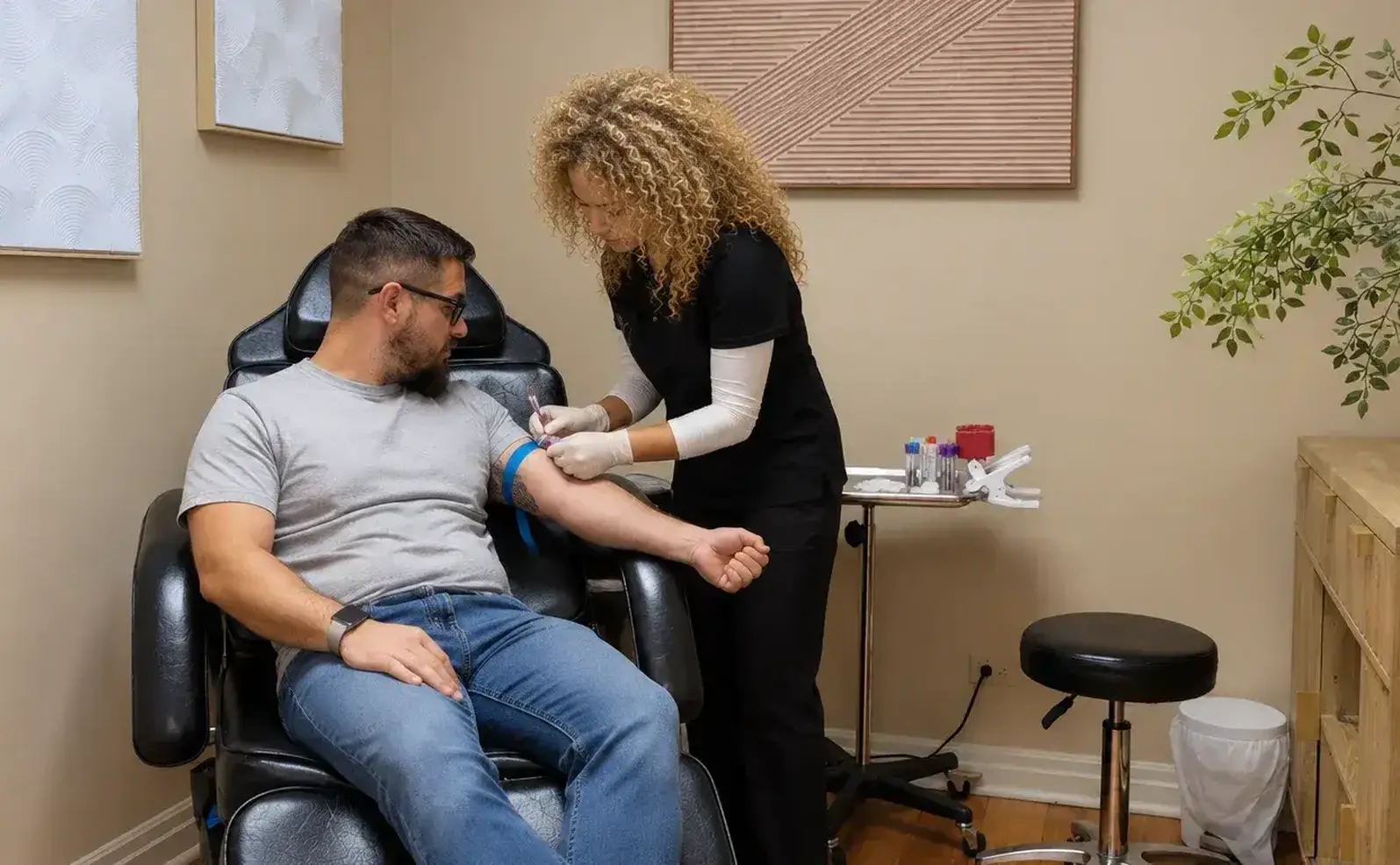
Your First Visit
Labs Drawn in Our Office
Your hormone panel is drawn right here in our Lake Forest office, so testing fits into your care instead of a separate trip.
- 90-Minute First Visit
- Results Reviewed With You
- Same Provider Every Visit
A Personalized Approach to Hormone Care
Hormone Optimization Should Reflect Your Symptoms, Health History & Stage of Life
Hormone care should not follow a one-size-fits-all protocol.
Your provider considers how hormone-related concerns may overlap with sleep, stress, metabolic health, body composition, sexual wellness, nutrition, medications, and other medical factors that can influence how you feel.
When treatment is appropriate, recommendations are individualized around your clinical findings, symptoms, risk factors, preferences, and treatment goals rather than aiming for a specific hormone number alone.
Hormone care may also be coordinated with functional medicine, medical weight management, sexual wellness care, and other areas of personalized treatment when clinically appropriate.
What to Expect From Hormone Optimization
A Personalized Process That Evolves With Your Symptoms, Health & Response
Hormone optimization is individualized, and response can vary depending on your symptoms, stage of life, overall health, treatment plan, and other contributing factors.
During follow-up, your provider may review changes in energy, sleep, mood, body composition, sexual wellness, metabolic health, and other concerns discussed during your initial evaluation.
The goal is to maintain a thoughtful, personalized approach rather than follow a fixed hormone protocol, with care evolving as your clinical findings, priorities, and long-term wellness goals change over time.
Benefits of Personalized Hormone Optimization
Personalized Care Built Around Your Symptoms, Clinical Findings & Treatment Goals
Symptom-Focused Care
Treatment is designed around the specific symptoms and concerns affecting your quality of life, such as energy, sleep, mood, and libido, rather than focusing only on reaching a particular hormone number.
Metabolic Health Integration
Hormone-related concerns can be evaluated alongside weight, body composition, energy, sleep, and metabolic health when those areas are clinically relevant, so your care plan reflects the whole picture.

Sexual Wellness Support
Care may address hormone-related concerns involving libido, sexual function, vaginal comfort, vitality, and overall sexual well-being as part of a broader, individualized health evaluation with your provider.
Individualized Treatment Options
When treatment is appropriate, options are matched to your symptoms, stage of life, and risk factors, and may include lifestyle support, hormone therapy, or coordinated care with related services.

Hormone Optimization & Metabolic Health
Understanding the Connection Between Hormones, Metabolism & Body Composition
Hormonal changes can sometimes overlap with concerns involving energy, appetite, weight distribution, muscle mass, body composition, blood sugar regulation, and overall metabolic health. These changes may also be influenced by sleep, nutrition, activity, medications, age, and other health factors.
For patients experiencing ongoing weight or metabolic concerns, hormone evaluation may be coordinated with a medical weight management plan when clinically appropriate.
The goal is to create a more complete and individualized approach that considers how hormone health, metabolism, lifestyle, and other factors may interact over time.
Patients who want hormone care alongside routine primary care can see the same provider for both, with primary care provided through Direct Primary Care.
Hormone Optimization & Sexual Wellness
Considering Hormone Health as Part of a Broader Approach to Sexual Well-Being
Changes in hormone levels can sometimes overlap with concerns involving libido, sexual function, vaginal comfort, erectile function, energy, mood, and overall sexual well-being. These concerns can also have non-hormonal causes, including medications, stress, medical conditions, relationship factors, and lifestyle.
When appropriate, hormone evaluation may be coordinated with pelvic and sexual health care as part of a broader personalized treatment plan.
Is Hormone Optimization Right for You?
Who May Be a Candidate for Hormone Optimization?
Hormone optimization may be appropriate for adults experiencing concerns involving energy, sleep, mood, libido, body composition, sexual wellness, hot flashes, menstrual changes, or other symptoms that may be associated with hormonal changes.
Women may seek evaluation during perimenopause, menopause, or other stages of hormonal transition, while men may want to explore whether clinically low testosterone could be contributing to changes in how they feel.
Candidacy depends on your symptoms, medical history, medications, stage of life, laboratory findings when appropriate, risk factors, and individual treatment goals.
The purpose of the evaluation is to determine whether hormone-related factors may be contributing to your concerns and whether monitoring, lifestyle support, hormone therapy, or another treatment approach may be appropriate.
Who May Not Be a Candidate for Hormone Optimization?
Hormone therapy may not be appropriate for patients with certain medical conditions, significant risk factors, medication interactions, or other health concerns that could increase treatment risk or require additional evaluation first.
Some patients may also have symptoms that are better explained by sleep disorders, medication effects, thyroid concerns, mental health conditions, metabolic issues, or other medical factors rather than a hormone-related problem.
Because hormone treatment decisions depend on your medical history, symptoms, stage of life, laboratory findings when appropriate, risk factors, and treatment goals, candidacy should be evaluated individually.
When hormone therapy is not appropriate, your provider can discuss other treatment options, additional evaluation, lifestyle support, or referral when needed based on your clinical circumstances.
Clinical Oversight & Safety
Hormone optimization requires consideration of your symptoms, medical history, medications, laboratory findings when appropriate, cardiovascular and metabolic risk factors, and other health conditions that may influence treatment decisions.
At Lake Forest Regenesis, hormone therapy is not based on symptoms or laboratory values alone. Your provider considers the broader clinical picture, potential benefits, individual risks, treatment goals, and available alternatives before recommending care.
For women, guidance from ACOG emphasizes individualized assessment when considering menopausal hormone therapy. For men, the Endocrine Society recommends evaluating both symptoms and appropriately measured testosterone levels when assessing possible hypogonadism.
Ongoing follow-up may include review of symptom response, treatment tolerance, laboratory findings, medication changes, and evolving health risks so care can be adjusted when clinically appropriate.
When We Refer to a Specialist
If symptoms point to something beyond Allana's scope, such as a pituitary or adrenal disorder, abnormal bleeding, a hormone-sensitive cancer history, or fertility concerns, she refers you to the right specialist and helps coordinate next steps.
Medical Disclaimer
This content is for informational purposes only and is not intended to diagnose, treat, cure, or prevent any disease. All therapies are prescribed only after a comprehensive medical evaluation by a licensed provider. Results and outcomes may vary. Click for Full Disclaimer
Meet Your Hormone Optimization Provider
Personalized Hormone Care Led by an Experienced Family Nurse Practitioner
Hormone optimization at Lake Forest Regenesis is led by Allana Bush, FNP-C, RN, PHN, MSN, a family nurse practitioner with 22 years of healthcare experience.
Her clinical focus includes hormone optimization, medical weight management, metabolic health, functional and regenerative medicine, and personalized wellness care. This broader background allows hormone-related concerns to be considered within the context of each patient’s overall health rather than evaluated in isolation.
Patients receive ongoing follow-up so treatment can evolve based on symptom response, clinical findings, changing health needs, and long-term wellness priorities.
Related Reading
Hormone Health Articles From Our Patient Education Library
Frequently Asked Questions About Hormone Optimization
Answers to Common Questions About Personalized Hormone Evaluation & Treatment
What is hormone optimization?
Hormone optimization is a provider-guided approach to evaluating symptoms, hormone-related concerns, and overall health. Care may include lifestyle support, laboratory testing when appropriate, ongoing monitoring, or hormone therapy when clinically appropriate.
How do I know if my symptoms are hormone-related?
Symptoms such as fatigue, sleep changes, mood changes, libido concerns, hot flashes, or changes in body composition can have many possible causes. Evaluation considers your health history, medications, stage of life, symptoms, and clinical findings rather than assuming hormones are the only cause.
Do I need lab testing for a hormone imbalance?
Laboratory testing may be recommended when clinically appropriate based on your symptoms, medical history, medications, stage of life, and treatment goals. Results are interpreted alongside your overall clinical picture rather than used in isolation.
Does hormone optimization include hormone replacement therapy?
It can. When clinically appropriate, hormone therapy may be discussed as one part of a personalized care plan. Other recommendations may include lifestyle support, additional evaluation, ongoing monitoring, or treatment of other contributing health factors.
How long does hormone optimization take?
There is no single timeline. The length of care depends on your symptoms, treatment plan, response, health needs, and whether ongoing hormone therapy or monitoring is appropriate. Follow-up helps determine when adjustments may be needed.
Can hormone optimization be combined with weight or sexual wellness care?
Yes, when clinically appropriate. Hormone care may be coordinated with medical weight management, pelvic and sexual health care, functional medicine, and other personalized services based on your individual needs.
Start Your Regenesis Today
Take the Next Step Toward Personalized Hormone Care
Your first step is a consultation focused on understanding your symptoms, medical history, medications, stage of life, lifestyle, and personal health goals.
Your initial consultation is a 90-minute visit with Allana that includes your lab draw, followed by a 90-minute visit to review your results and options.
From there, your provider can review your lab results with you and help you better understand the factors that could be contributing to changes in energy, sleep, mood, metabolism, body composition, sexual wellness, or overall well-being.
When treatment is appropriate, your care plan is individualized around your clinical findings, symptoms, preferences, risk factors, and long-term goals, with ongoing follow-up to monitor your response and adjust care when needed.
Results vary, and no treatment can be guaranteed. See our Medical Disclaimer.
A Personal Message From Your Provider
Hormone Care Should Be Personalized, Thoughtful & Connected to Your Overall Health
“My goal is to help patients better understand the hormonal and non-hormonal factors that may be contributing to how they feel.
I believe hormone care should begin with a thoughtful review of your symptoms, health history, medications, stage of life, laboratory findings when appropriate, and personal goals rather than relying on a single number or standardized protocol.
Whether you are experiencing changes involving energy, sleep, mood, body composition, sexual wellness, or overall well-being, I want you to feel informed about your options and comfortable asking questions.
The goal is to create a personalized care plan with appropriate monitoring and ongoing support that can evolve as your symptoms, health needs, and long-term priorities change.”
Allana Bush, FNP-C, RN, PHN, MSN
Medical Weight Management & Hormone Optimization
Lake Forest, IL