Quick Answer
It is common for weight loss on a GLP-1 medication to slow down or stop for a while, often after the first several months. A plateau usually reflects the body adjusting to a lower weight, along with changes in appetite, eating, activity or dosing. It does not necessarily mean the medication has stopped working. It is a good reason to review your plan with your provider.
Who this is for: adults taking a GLP-1 medication, such as semaglutide or tirzepatide, whose progress has slowed, and anyone who wants to know what to expect over time.

What Is a GLP-1 Plateau?
A plateau is a stretch of several weeks in which your weight stays about the same, even though you are still taking your medication and following your plan. It is different from the normal ups and downs of the scale. Day-to-day weight can shift by a few pounds because of fluid, salt, hormones, digestion and what you ate the night before, so one high reading does not mean progress has stopped. Looking at the trend over three to four weeks gives a clearer picture.
Plateaus are an expected part of treatment, not a sign that something went wrong. In the large clinical trial that led to semaglutide’s approval for weight management, average weight loss continued for about a year and then leveled off, reaching its lowest point around week 60.[1] Many people see a similar pattern: faster progress early on, a gradual slowdown, and then a period when weight holds steady.
Why Do Plateaus Happen?
There is rarely a single cause. More often, several of these are happening at the same time.
Your body adapts to a lower weight
As you lose weight, your body needs less energy to run. A smaller body burns fewer calories at rest and during activity, and the body also tends to defend its weight by nudging appetite and energy use in the other direction. The same eating pattern that produced steady loss at the start may simply match your body’s needs at a lower weight.
Appetite and eating patterns shift
Many people notice that the strong appetite reduction of the first few months softens over time. Portions may creep up, snacking may return, or meals may become less structured without it being obvious. This is not a lack of willpower. It is a normal part of how the body responds to long-term weight loss.
Dose and timing
GLP-1 medications are increased gradually. Some people plateau while they are on a lower dose, or after missed doses, changing injection days or pausing because of side effects. Your provider can review whether your current dose and schedule still fit your goals and how well you are tolerating the medication.
Muscle, sleep, stress and other medications
Losing muscle along with fat can lower the number of calories your body burns. In a body-composition substudy of the main semaglutide trial, roughly 40 percent of the weight lost was lean mass, which includes muscle as well as water and other tissue.[1] Short or poor sleep, ongoing stress, some medications and conditions such as low thyroid function or insulin resistance can also make further weight loss harder.
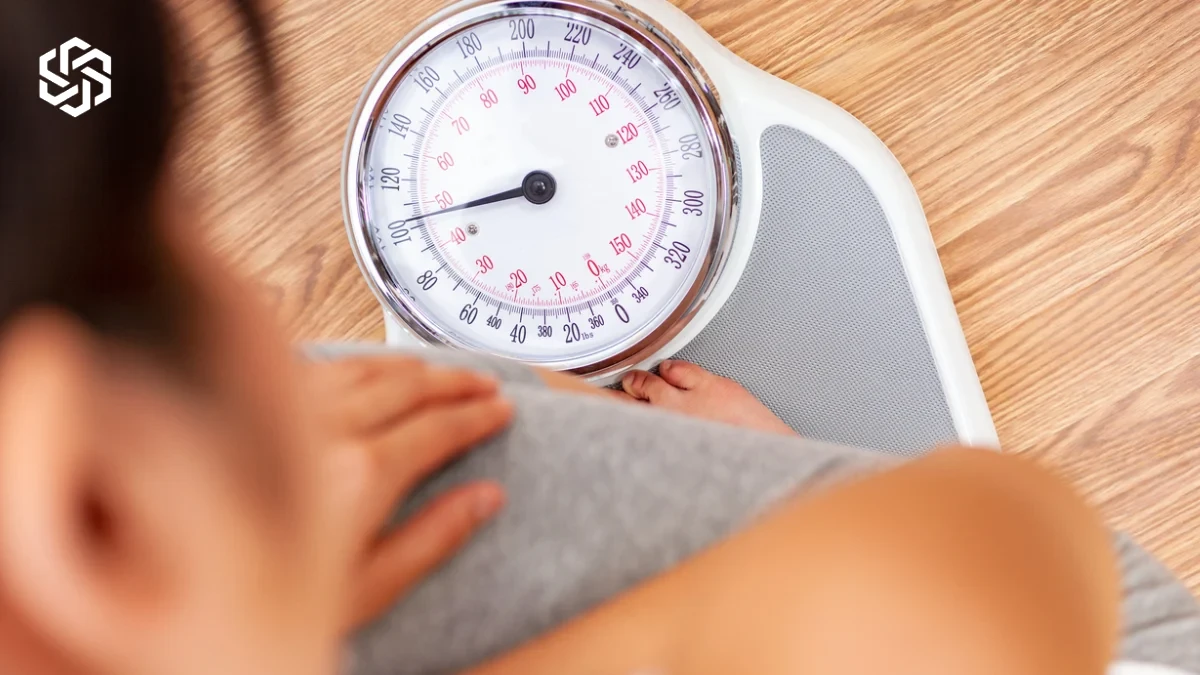
Weight loss on GLP-1 medications often slows and levels off over time.
What to Review With Your Provider
A plateau is a good time to step back and look at the full picture rather than the scale alone. A helpful review often includes:
- Your dose, schedule and side effects, and whether an adjustment is appropriate
- How much protein you are eating. A 2025 joint advisory from four medical and nutrition organizations lists adequate protein and strength training as priorities for preserving lean mass during GLP-1 therapy.[3]
- Strength training, which helps protect muscle while you lose fat
- Sleep, stress and any new medications
- Lab work, when appropriate, to look for issues such as thyroid changes or blood sugar problems
- Body composition and measurements, not just weight
Sometimes a plateau also means you have reached a weight your body can comfortably maintain. In that case, the goal may shift from losing more to keeping what you have achieved. In a follow-up to the semaglutide trial, participants regained about two-thirds of the weight they had lost within a year of stopping treatment, so any change to your medication should be planned with your provider.[2]

How We Approach Plateaus at Lake Forest Regenesis
When a patient’s progress stalls, Allana starts by looking at the trend rather than a single weigh-in. She reviews how the medication is being taken and tolerated, how eating and activity compare with the first few months, and whether sleep or stress have changed. When appropriate, she may order labs to check for factors such as thyroid function or blood sugar changes. From there, the plan might include adjusting the dose, focusing on protein and strength training to protect muscle, or shifting the goal from loss to maintenance. Because every plan is individualized, the next step depends on your history, your labs and what matters most to you.
When to See a Provider
Contact your provider promptly if you have severe or persistent abdominal pain, ongoing vomiting or trouble keeping fluids down, signs of dehydration, pain in the upper right abdomen with fever or yellowing of the skin or eyes, or symptoms of low blood sugar if you also take diabetes medication. Severe abdominal pain that does not go away needs emergency care. A plateau on its own is usually not urgent, but it is worth bringing up at your next visit.

Progress slowing on a GLP-1? Allana can review your trend, dose, side effects and habits and help you plan the next step.
Frequently Asked Questions
How long does a GLP-1 plateau last?
It varies. Some plateaus break after a few weeks, especially once changes are made to dose, eating or activity. Others reflect a weight your body can maintain, and the focus shifts to keeping the weight off. Look at the trend over three to four weeks before deciding a plateau has started.
Should I increase my dose if I hit a plateau?
Not necessarily. A higher dose can help some people, but it depends on how well you tolerate the medication, your current dose and your overall goals. Dose changes should always be made with your provider.
Does a plateau mean my medication stopped working?
Usually not. Many people continue to benefit from the medication by maintaining their weight loss, even when the scale stops moving. Stopping without a plan often leads to weight regain.
Can I lose fat even if the scale is not moving?
It is possible. If you are strength training and eating enough protein, you may be keeping or building muscle while losing fat, which can leave the scale flat. Measurements, how your clothes fit and body composition testing can show changes the scale misses.
References
- Wilding JPH, et al. Once-weekly semaglutide in adults with overweight or obesity. N Engl J Med. 2021;384:989-1002. Read the study
- Wilding JPH, et al. Weight regain and cardiometabolic effects after withdrawal of semaglutide: the STEP 1 trial extension. Diabetes Obes Metab. 2022;24(8):1553-1564. Read the study
- Mozaffarian D, et al. Nutritional priorities to support GLP-1 therapy for obesity: a joint advisory from the American College of Lifestyle Medicine, the American Society for Nutrition, the Obesity Medicine Association and The Obesity Society. 2025. Read the advisory
This article is for general education and is not a substitute for individual medical advice. See our medical disclaimer.