

Quick Answer
Ferritin is a blood test that reflects how much iron your body has stored. Iron stores can run low well before anemia shows up on a blood count, and low stores can still cause symptoms such as fatigue, reduced exercise tolerance and hair shedding. Ferritin can also rise with inflammation, so it is best read alongside other iron tests and your symptoms.
Who this is for: adults who have had ferritin or iron tested, especially women with heavy periods, people who eat little or no meat, frequent blood donors and endurance athletes.
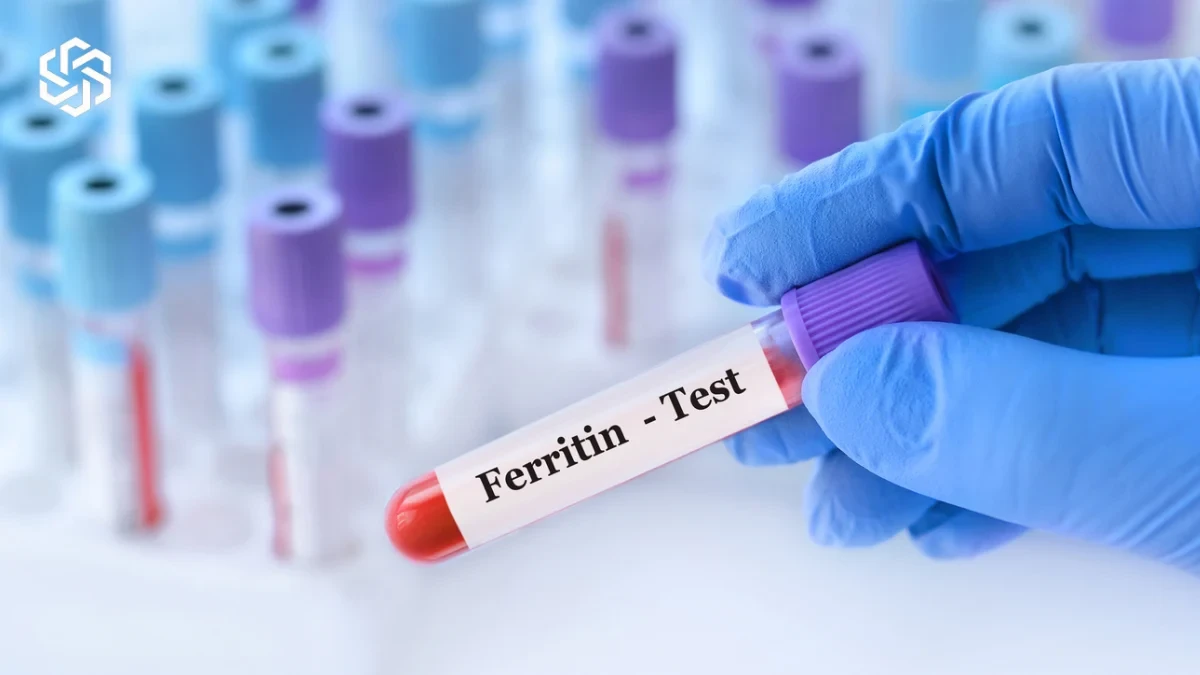
What Ferritin and Iron Tests Measure
Iron is needed to make hemoglobin, which carries oxygen through the blood, and it plays a role in energy and brain function. A complete iron evaluation may include:[1]
- Ferritin: a protein that stores iron, used as a marker of iron stores
- Serum iron: the amount of iron in the blood at that moment, which changes during the day
- Transferrin saturation: how much of the blood’s iron-carrying protein is in use
- Complete blood count: hemoglobin and red blood cell size, which show whether anemia is present
Low Iron Happens in Stages
Iron deficiency develops gradually. First, iron stores fall, which shows up as low ferritin. Later, the body has less iron to make red blood cells, and eventually iron-deficiency anemia develops, with low hemoglobin.[2]
This means a person can have a normal hemoglobin, and be told they are “not anemic,” while still having low iron stores. Some people in this earlier stage notice fatigue, trouble exercising, restless legs, brittle nails or hair shedding.

Iron stores can fall well before anemia appears.
Why "Normal" Can Be Misleading
Ferritin reference ranges are wide, and a result near the low end of normal may still reflect limited iron stores for some people. Researchers and clinicians use different cutoffs for iron deficiency, and some guidelines use higher thresholds than the lab range when symptoms are present.
Ferritin can also be misleading in the other direction. Because it rises with inflammation, infection, liver disease and some chronic conditions, a normal or high ferritin does not always mean iron stores are adequate. That is why ferritin is interpreted with other iron tests, inflammation markers when needed and your symptoms.
High ferritin is also worth evaluating, since it can point to inflammation, liver problems or iron overload conditions such as hemochromatosis.
Common Causes of Low Iron and What Helps
Common causes include heavy menstrual periods, pregnancy, low dietary intake, frequent blood donation, intense endurance training, conditions that affect absorption such as celiac disease or bariatric surgery, and slow blood loss from the digestive tract.[1]
Treatment depends on the cause. Options may include iron-rich foods, oral iron supplements and, in some cases, IV iron. Finding and treating the reason for low iron is just as important as replacing it, especially in men and postmenopausal women, where unexplained iron deficiency should be evaluated for possible blood loss.
Iron supplements are not harmless, and too much iron can be dangerous, so take them only when testing shows you need them.

How We Approach Iron Testing at Lake Forest Regenesis
Allana orders iron studies when your symptoms or history suggest a problem, and reads ferritin alongside your blood count, other iron tests and how you feel. If iron is low, she looks for the reason as well as the right way to replace it, and she will recommend further evaluation when blood loss or an absorption problem needs to be ruled out.
When to See a Provider
Seek prompt care for black or bloody stools, vomiting blood, very heavy menstrual bleeding, shortness of breath at rest, chest pain or fainting. Call 911 for severe symptoms. See a provider for ongoing fatigue, unusual shortness of breath with activity, restless legs or cravings to chew ice, which can be signs of low iron.

Tired, short of breath or craving ice? Allana can order iron studies and look for the cause if your levels are low.
Frequently Asked Questions
Can I have low iron without anemia?
Yes. Iron stores can be low before hemoglobin drops. This earlier stage can still cause symptoms in some people.
Should I take iron just in case?
No. Iron supplements can cause side effects, and too much iron can be harmful. Testing first helps confirm whether you need it.
Why is my ferritin high?
High ferritin can be caused by inflammation, infection, liver disease, alcohol use or iron overload. It should be evaluated in context.
How long does it take to rebuild iron stores?
It usually takes several months of treatment to replenish stores, even after hemoglobin improves. Your provider may recheck levels to confirm.
References
- NIH Office of Dietary Supplements. Iron: fact sheet for health professionals. Read the fact sheet
- National Heart, Lung, and Blood Institute. Iron-deficiency anemia. Read the article
This article is for general education and is not a substitute for individual medical advice. See our medical disclaimer.




