

Quick Answer
Estradiol and FSH are hormone tests often ordered when perimenopause is suspected. During perimenopause, both can swing widely from week to week, so a single result may look normal, high or low depending on the day it was drawn. For most women over 45, perimenopause is identified mainly by symptoms and cycle changes. Labs are most useful in specific situations.
Who this is for: women in their 40s or early 50s who have had estradiol or FSH tested, or are wondering whether a blood test can confirm perimenopause.
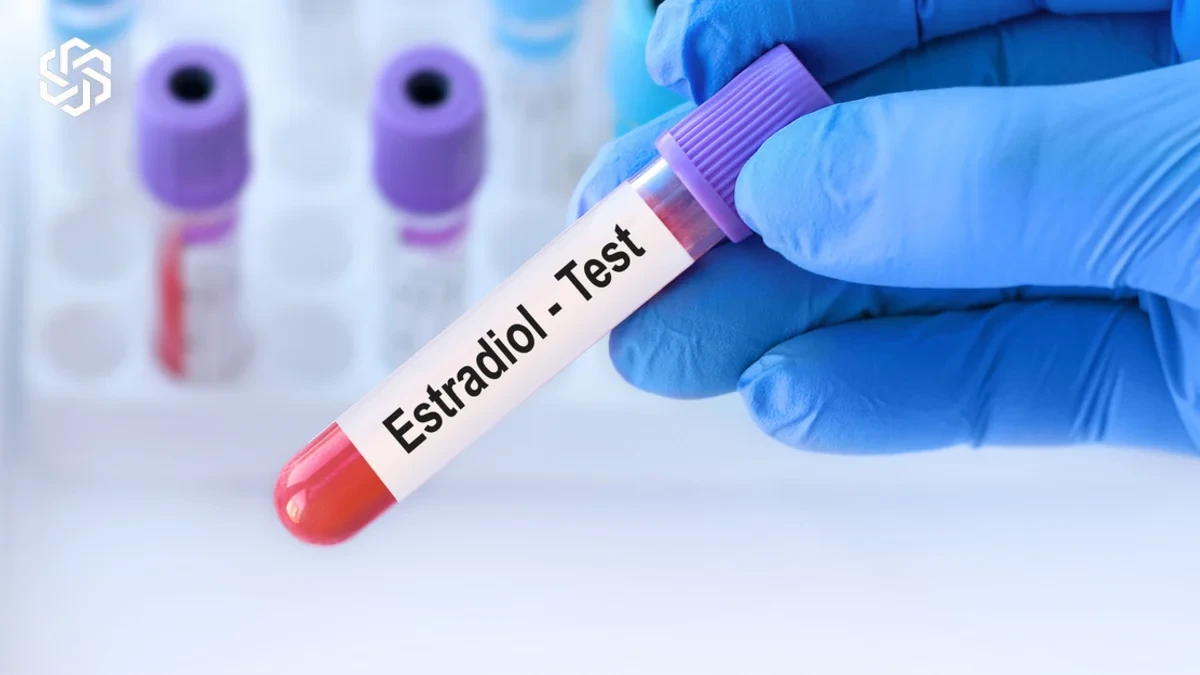
What Estradiol and FSH Measure
Estradiol is the main form of estrogen made by the ovaries during the reproductive years. FSH, or follicle-stimulating hormone, is released by the pituitary gland in the brain and signals the ovaries to develop eggs.[1]
As the ovaries age, they respond less to FSH. The brain tries to compensate by releasing more, so FSH tends to rise over time. Estradiol, meanwhile, becomes less predictable before it eventually falls after menopause.
Why Results Can Be Misleading in Perimenopause
Perimenopause is not a smooth decline. Some cycles still release an egg and produce high estrogen, while others do not. As a result:
- FSH may be high one month and normal the next
- Estradiol may be low, normal or even higher than usual on any given day
- Results depend heavily on where you are in your cycle when blood is drawn
- Hormonal birth control and hormone therapy change these results
Because of this variability, a single normal FSH result does not rule out perimenopause, and a single high result does not confirm menopause.[2]

During perimenopause, hormone levels can change significantly from week to week.
When These Labs Are Useful
Hormone testing can still help in certain situations:
- Symptoms or missed periods before age 40 to 45, when other causes need to be considered
- Periods that stopped after a hysterectomy or endometrial ablation, making cycle changes hard to track
- Ruling out other conditions, such as thyroid problems, high prolactin or pregnancy
- Some fertility evaluations
Testing is often paired with other labs, such as a thyroid panel, depending on symptoms.
How Perimenopause Is Usually Identified
For most women over 45, perimenopause is identified by a combination of age, symptoms such as hot flashes, night sweats, sleep changes and mood changes, and changes in the menstrual cycle, such as cycles becoming shorter, longer or irregular. Treatment decisions are also based mainly on symptoms and health history rather than hormone levels.
Keeping a simple log of your cycles and symptoms for a few months is often more informative than a single blood test.

How We Use Hormone Labs at Lake Forest Regenesis
Allana orders estradiol, FSH and related tests when they add useful information, such as when symptoms begin earlier than expected, when periods cannot be tracked, or when other conditions need to be ruled out. Results are always read alongside your symptoms, cycle history and health history, and treatment decisions are based on the whole picture rather than a single lab value.
When to See a Provider
See a provider for symptoms that affect your sleep, mood or daily life, for missed periods before age 45, or for very heavy bleeding, bleeding between periods or after sex. Any bleeding after 12 months without a period should be evaluated promptly.
Wondering what your hormone labs mean, or whether you need them? Allana reads results alongside your symptoms and cycle history.
Frequently Asked Questions
Can an FSH test tell me if I am in menopause?
Not on its own during the transition, because FSH changes from month to month. Menopause is confirmed after 12 months without a period.
Should I test my hormones on a specific day of my cycle?
Sometimes. If testing is needed, your provider may ask for a specific cycle day so results can be interpreted more accurately.
Does birth control affect these tests?
Yes. Hormonal birth control and hormone therapy can change estradiol and FSH results, which makes them harder to interpret.
Do I need labs to start menopause treatment?
Often not. For many women over 45, treatment decisions are based on symptoms and health history.
References
- MedlinePlus. Follicle-stimulating hormone (FSH) levels test. U.S. National Library of Medicine. Read the article
- Eunice Kennedy Shriver National Institute of Child Health and Human Development. Menopause. Read the article
This article is for general education and is not a substitute for individual medical advice. See our medical disclaimer.




