

Quick Answer
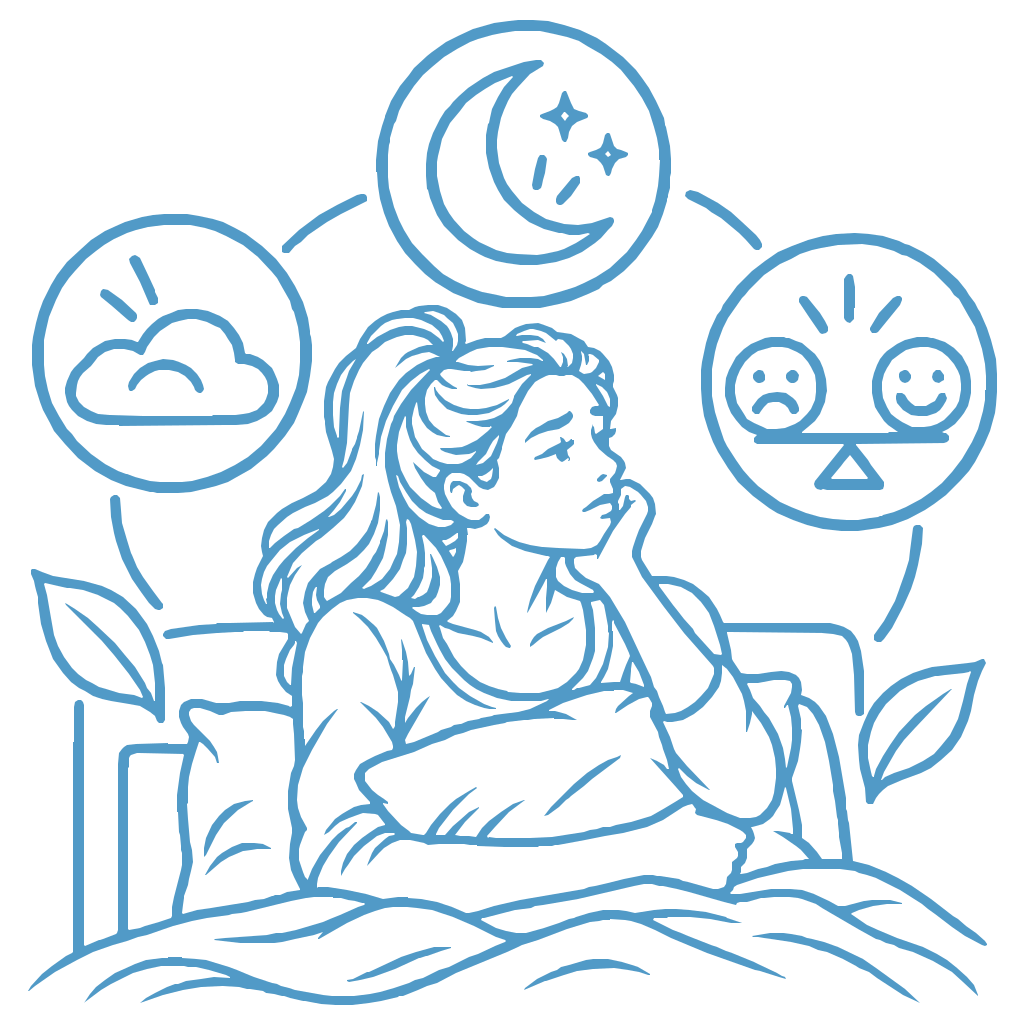
During the menopause transition, sleep, mood and weight often change together, and each can affect the others. Night sweats and hormone shifts disrupt sleep, poor sleep worsens mood and increases cravings, and changes in hormones and muscle mass shift where the body stores fat. Because these symptoms are connected, treating one often helps the others.
Who this is for: women in perimenopause or menopause who are noticing changes in sleep, mood, energy or weight at the same time.
Sleep Changes
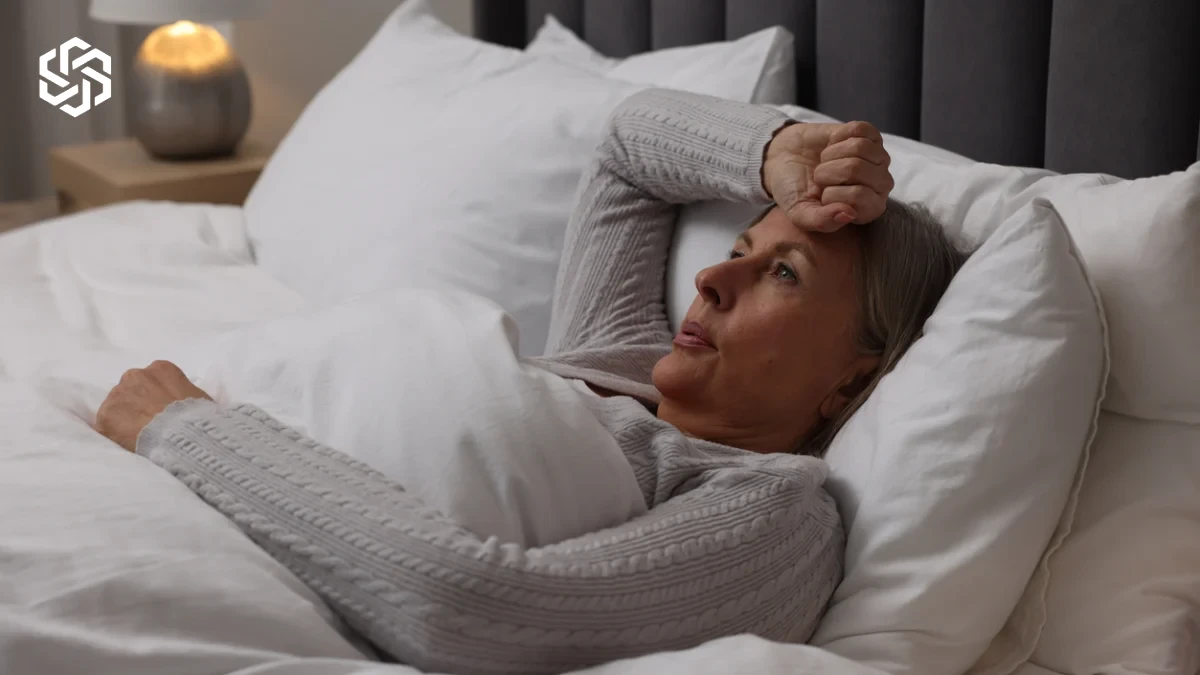
Sleep problems are among the most common complaints during the menopause transition.[1] Hot flashes and night sweats can wake you repeatedly, and hormone changes can make sleep lighter and less refreshing even without night sweats. The risk of sleep apnea also rises after menopause, so loud snoring or daytime sleepiness should be checked.
Mood Changes
Many women notice more irritability, anxiety, low mood or mood swings during perimenopause. Fluctuating hormones play a role, and the risk of depression is higher during this transition, especially for women with a history of depression or significant premenstrual mood symptoms. Poor sleep, life stress and caregiving demands often add to the strain.
Weight and Body Changes
Weight gain in midlife is common, and it is influenced by aging, less physical activity and gradual loss of muscle. The menopause transition itself tends to shift fat toward the abdomen, even when total weight does not change much.[2] Abdominal fat is linked with higher risk of insulin resistance and heart disease, which is why waist size is worth tracking.
How They Feed Into Each Other
These changes often create a cycle:
- Night sweats and hormone changes disrupt sleep
- Poor sleep worsens mood, increases hunger and cravings and lowers energy for activity
- Low mood and fatigue make exercise and healthy eating harder
- Less activity and muscle loss make weight gain easier
- Weight gain and stress can worsen sleep and mood further
Breaking the cycle at any point helps. For example, treating hot flashes can improve sleep, which can improve mood and make healthy routines easier.
What can help
- Strength training and regular activity, which support muscle, mood and sleep
- Consistent sleep routines and a cool bedroom
- Meals built around protein and fiber
- Limiting alcohol, which can trigger hot flashes and disrupt sleep
- Stress management and support, including counseling when needed
- Medical treatment for symptoms, including hormone therapy for women who are good candidates and non-hormonal options[2]

Sleep, mood and weight changes during menopause often reinforce each other.

How We Approach Menopause Symptoms at Lake Forest Regenesis
Allana looks at menopause symptoms together rather than one at a time. She asks about sleep, mood, hot flashes, weight, energy and relationships, reviews your health history and risk factors, and orders labs when they help rule out other causes such as thyroid problems. Treatment options, from lifestyle changes to hormone therapy when appropriate, are matched to the symptoms that matter most to you.
When to See a Provider
Seek help right away if you have thoughts of harming yourself; call or text 988. See a provider for ongoing low mood or anxiety, sleep problems that affect daily life, loud snoring or breathing pauses during sleep, or abnormal bleeding, including any bleeding after menopause.
Sleep, mood and weight all shifting at once? Allana can look at your symptoms together and focus on what matters most to you.
Frequently Asked Questions
Does menopause cause weight gain?
Menopause tends to shift weight toward the abdomen. Total weight gain in midlife is influenced by aging, activity and muscle loss as well as hormones.
Can hormone therapy help with sleep?
For women whose sleep is disrupted by hot flashes and night sweats, hormone therapy can improve sleep. Whether it is right for you depends on your health and risks.
Is depression more common during perimenopause?
Yes. The risk of depression is higher during the transition, especially for women with a history of depression.
What is the most helpful first step?
Many women start by addressing whichever symptom bothers them most, often sleep or hot flashes, because improving it can help the others.
References
- Eunice Kennedy Shriver National Institute of Child Health and Human Development. Menopause. Read the article
- The North American Menopause Society. The 2022 hormone therapy position statement. Menopause. 2022. Read the statement
This article is for general education and is not a substitute for individual medical advice. See our medical disclaimer.




