

Quick Answer
Muscle mass and strength naturally decline with age, a process that speeds up later in life and is called sarcopenia when it becomes significant. Muscle supports balance, independence, blood sugar control and metabolism, so losing it raises the risk of falls, fractures and frailty. Regular strength training, enough protein and staying active can slow this decline at any age.
Who this is for: adults in midlife and beyond who want to stay strong, independent and active, including those losing weight.

What Happens to Muscle With Age
Muscle mass usually peaks in early adulthood. After that, many people gradually lose muscle and strength, especially without regular strength training. The loss tends to accelerate in later decades. Strength often declines faster than muscle size, which affects everyday tasks such as climbing stairs, carrying groceries or getting up from a chair.
When muscle loss becomes significant enough to affect strength and function, it is called sarcopenia.
Why Muscle Matters Beyond Appearance
- Balance and falls: stronger legs and core muscles lower the risk of falls and fractures
- Independence: strength makes daily activities easier for longer
- Blood sugar: muscle is a major site where the body uses sugar, so more muscle supports healthier blood sugar
- Metabolism: muscle uses more energy than fat, which can help with weight management
- Bone health: strength training puts healthy stress on bones, which supports bone density
- Recovery: people with more muscle often recover better from illness and surgery
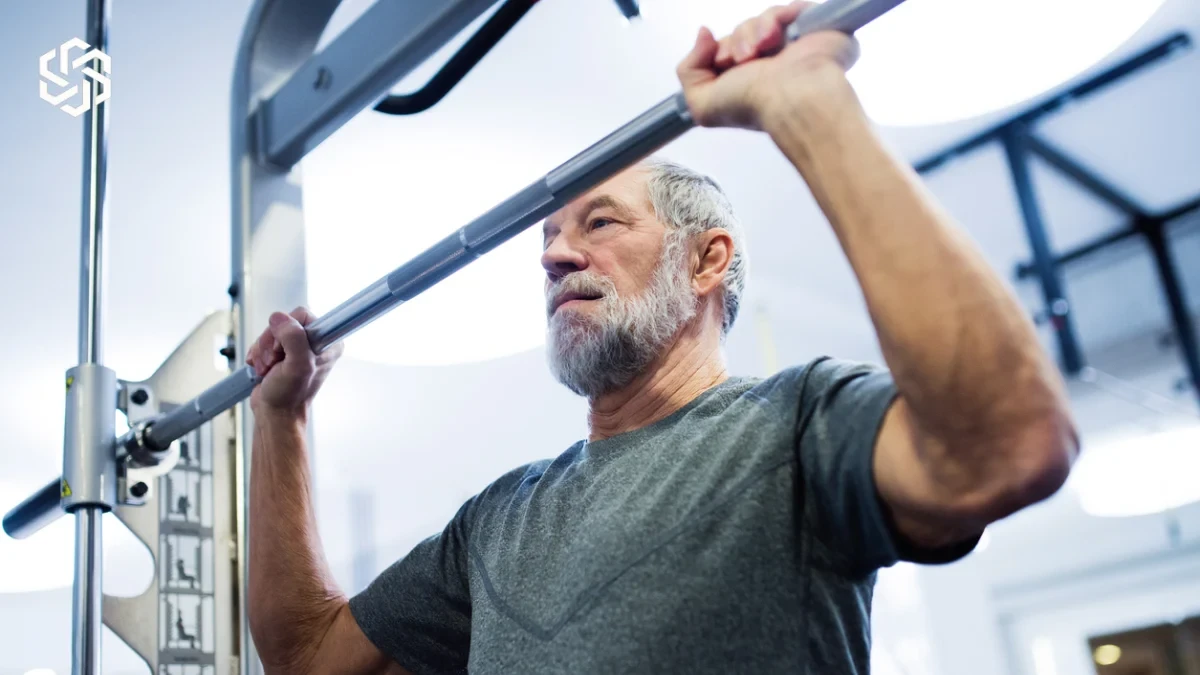
Strength training helps preserve muscle and function with age.
What Speeds Up Muscle Loss
- Physical inactivity and long periods of sitting
- Low protein intake, especially in older adults whose appetite has decreased
- Rapid or significant weight loss without strength training
- Illness, hospital stays and periods of bed rest
- Hormone changes, including menopause and low testosterone
- Chronic conditions such as diabetes, kidney disease and inflammatory conditions
How to Protect Muscle at Any Age
It is never too late to build strength. Even people in their 70s and 80s can gain strength with a well-designed program.
- Strength train at least two days a week, working all major muscle groups, as recommended in federal physical activity guidelines[1]
- Include protein at each meal, since spreading protein through the day may help muscle maintenance
- Stay active daily, with walking and other movement
- Include balance exercises, especially as you get older[1]
- Protect muscle during weight loss by losing weight at a steady pace and continuing strength training
If you have health conditions, joint problems or have been inactive, talk with a provider before starting, and consider working with a physical therapist or qualified trainer.

How We Approach Muscle Health at Lake Forest Regenesis
Allana considers muscle health a core part of healthy aging and weight management. She looks at your activity, protein intake, hormone status and health conditions, and helps set realistic strength goals. During weight loss, the plan is designed to protect muscle, and progress is measured by strength and function as well as by the scale.
When to See a Provider
Talk with a provider if you notice increasing weakness, trouble getting up from a chair, slower walking, frequent falls or unintended weight loss. Seek care promptly after a fall with injury, sudden weakness on one side of the body or new trouble walking. Call 911 for sudden weakness, numbness or trouble speaking.

Want to stay strong as you age? We can review your activity, protein and health history and set realistic strength goals.
Frequently Asked Questions
At what age does muscle loss start?
Gradual loss can begin in midlife and tends to speed up later in life, especially without strength training.
Is walking enough to keep muscle?
Walking is excellent for heart health and endurance, but strength training is needed to maintain and build muscle.
Can older adults build muscle?
Yes. Studies show that people of all ages, including those in their 80s, can gain strength with regular resistance training.
How much protein do older adults need?
Needs vary based on health and activity. Many older adults benefit from including protein at every meal. Ask your provider, especially if you have kidney disease.
References
- Centers for Disease Control and Prevention. Adult activity: an overview. Read the guidelines
- Mozaffarian D, et al. Nutritional priorities to support GLP-1 therapy for obesity: a joint advisory. 2025. Read the advisory
This article is for general education and is not a substitute for individual medical advice. See our medical disclaimer.




